
Fly agaric: what is actually known
History, chemistry, the medicines that came out of it, research, use and safety statistics. Every claim carries a label showing how well it is verified, plus a link to the source.
- clinic, registries
- lab, animals
- people's accounts
- hypothesis
- not confirmed

History and magic
One of the most recognisable mushrooms on Earth. It was used for rituals, food and healing, and later became a hero of fairy tales and video games.
Shamans of the North
The Koryaks, Khanty, Mansi, Evenks and other Siberian peoples used dried fly agaric in rituals. According to Koryak legend, the mushroom grew from the spittle of the deity Vahiyinin. Reindeer are drawn to the mushroom, and hunters made use of this. The Sámi researcher Itkonen described the mushroom being used by sorcerers in Inari.
Recycling through urine. Part of the ibotenic acid leaves the body unchanged, so by Siberian custom others drank the urine of a person who had taken the mushroom. Steller wrote in 1774 that one dose could pass through four or five people. Preliminary human experiments (Chilton, 1979) confirmed this qualitatively, but not quantitatively.
Wikipedia; Ott, Pharmacotheon
Why “fly agaric”
Albertus Magnus recorded that the mushroom was crumbled into milk so that flies would drink it and die. Hence the name in many languages: fly agaric, Fliegenpilz. Another explanation: the medieval belief that flies getting into the head caused madness.
What is known about flies. In the 1960s, three tests were used at once to isolate the active substances: killing flies (Japan), stunning flies (England) and enhancing anaesthesia in mice (Switzerland). So both killing and stunning effects were observed. Later, in 2017 in Brazil, water extracts killed housefly larvae. And a mycologist's thirty years of observation showed that flies land on fly agaric more often than on anything else. We found no rigorous study confirming that adult flies simply fall asleep and fly off, although such observations are described many times.
Ott, Pharmacotheon; Carapeto et al., Biotemas, 2017; Fungi, 2018Europe learns of the Siberian custom
The Swedish officer Strahlenberg, held captive in Siberia, described the use of fly agaric among the Koryaks.
Fly agaric as food
The first known detoxification method, boiling and pouring off the water, was published by Langsdorff. At the end of the 19th century Félix Pouchet recommended eating fly agaric. In 19th-century Washington a Black street vendor sold fly agaric, boiled and pickled in vinegar, as a steak sauce. To this day the mushroom is eaten in Nagano Prefecture in Japan, usually salted and pickled.
Wikipedia; Tsunoda, 1993Homeopathy and folk medicine
The remedy Agaricus muscarius entered homeopathy and is still produced today. Fly agaric tinctures and rubs for the joints are known in Poland and Russia. No effect beyond placebo has been proven.
“Alice in Wonderland”
The mycologist Mordecai Cooke described distortions of size after fly agaric. It is thought to have influenced “Alice in Wonderland” (1865).
WikipediaPop culture
The dancing mushrooms in Disney's “Fantasia” (1940). The Super Mushroom in Super Mario. The red cap with white spots became a universal symbol of the forest and of fairy tales.
The active substances are found
Takemoto (Japan) isolated ibotenic acid; Onda (Japan) and Eugster (Switzerland) showed that muscimol is identical to the previously isolated pantherine and agarine. It turned out that the effect is not caused by muscarine, as had been thought.
Merck Index; WikipediaA new wave
Google searches for fly agaric grew by 114% from 2022 to 2023 (Leas et al., 2024). By RAND's estimate, about 3.5 million Americans used fly agaric products in 2025. In December 2024 the FDA stated that fly agaric may not be added to food.
Leas et al., 2024; RAND via CNN, 2026; FDAHypotheses
Beautiful ideas that are often retold. Here is what they actually contain.
Soma of the Rigveda
In 1968 Gordon Wasson linked the ancient Indian ritual drink to fly agaric. Most scholars today lean towards ephedra. The question remains disputed.
Wasson, 1968; WikipediaThe “Stoned Ape”
Terence McKenna (“Food of the Gods”, 1992) proposed that mushrooms helped early humans develop consciousness and language. He meant psilocybin mushrooms, not fly agaric. The theory is considered too speculative.
McKenna, 1992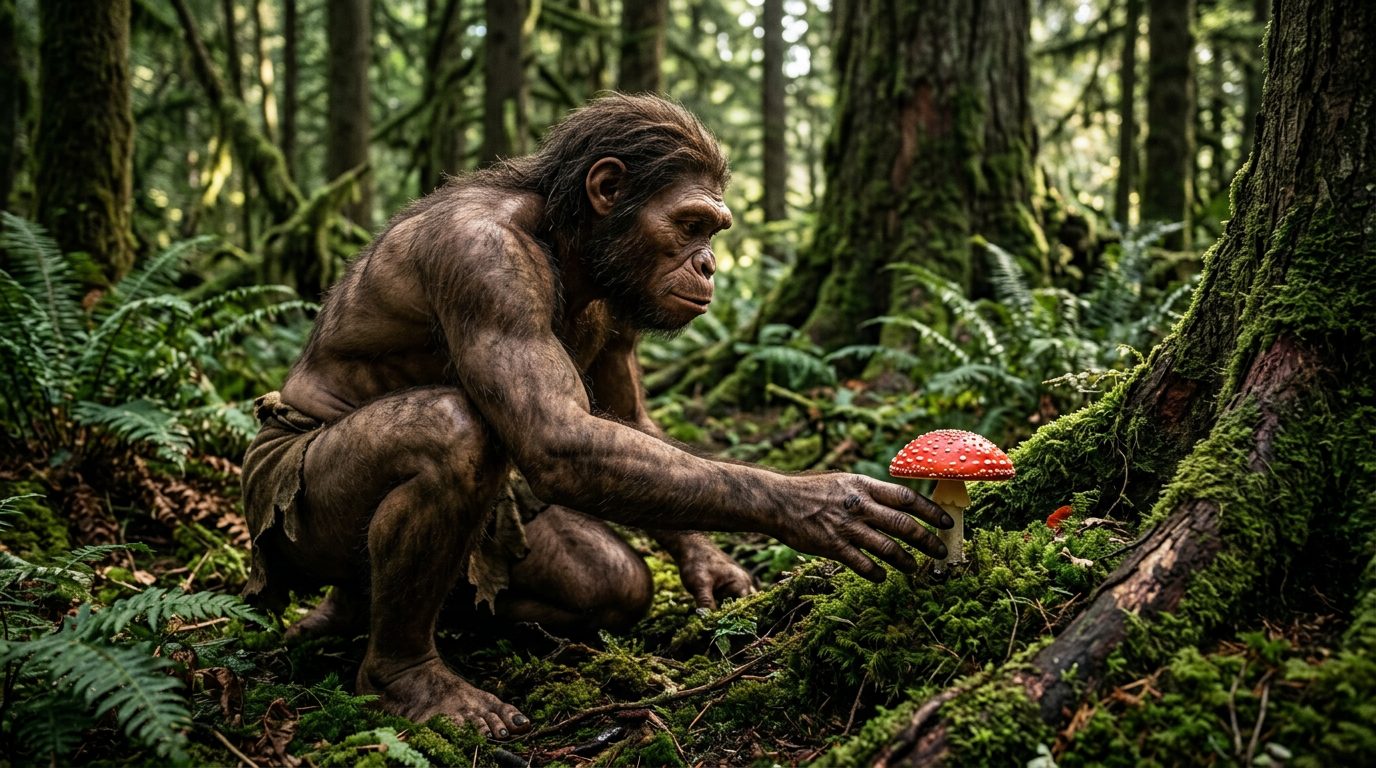
Fly agaric and neurogenesis
Data on the growth of new neural connections come mainly from psilocybin and LSD, which act through serotonin. Fly agaric works through GABA and glutamate. Reviews mention protection of nerve cells in rodents; there are no human data.
Matt, Medical Matters, 2026Santa Claus and the reindeer
A popular version says the red-and-white outfit and flying reindeer reflect Siberian fly agaric rituals. Sámi scholars and communities reject this; Tim Frandy calls the theory a romanticised misunderstanding.
Berserkers
In 1784 Samuel Ödmann suggested that Viking berserkers ate fly agaric before battle. The symptoms fit henbane better.
 Pine forest at dawn
Animals, churches, rubs
How animals deal with fly agaric, where people see it in medieval art, and how it is used externally.
Animals
Reindeer
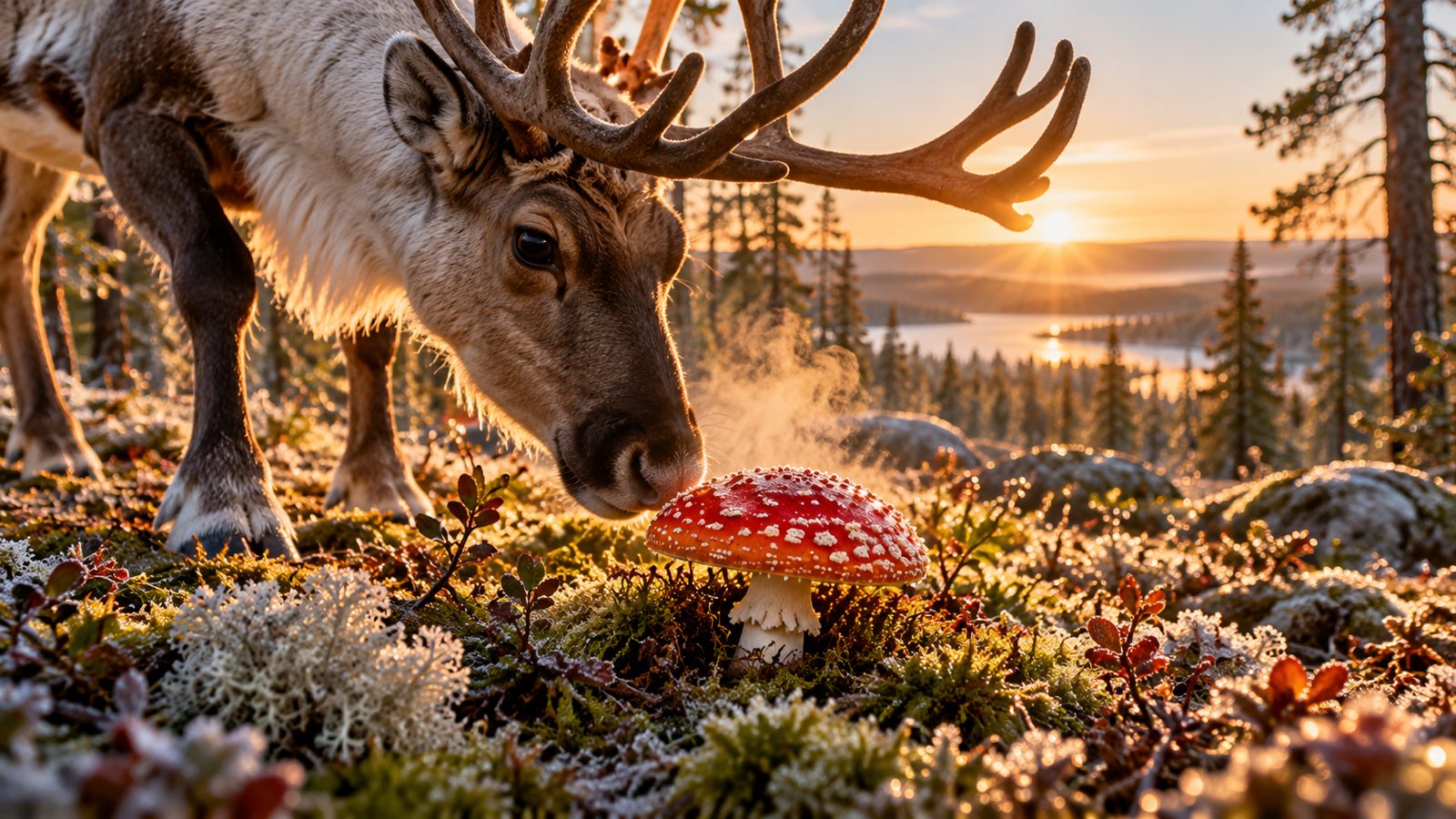
Biologists have observed reindeer eating fly agarics. Their complex stomach apparently neutralises some of the toxins. Whether reindeer get intoxicated is unknown: stories of “stoned” reindeer come from ethnography, not from research. Siberian herders themselves took dried fly agaric on long chases after the herd so they would not have to stop and rest, and a piece of the mushroom could once be traded for a whole reindeer.
The squirrel that came back for more
In Japan's Nagano Prefecture, a Japanese squirrel repeatedly ate fly agaric and panther cap and came back a few days later for more. The authors believe squirrels have adapted to Amanita toxins and may spread their spores.
Suetsugu, Gomi, Frontiers in Ecology and the Environment, 2021A favourite of flies
Despite its name, fly agaric is probably the most popular mushroom among mushroom-feeding flies in North America: fruit fly and fungus gnat larvae develop in it. Their tolerance to its toxins comes from cytochrome P450 enzymes. When these enzymes are blocked, the flies die just like ordinary ones.
Good for the forest
Fly agaric's main benefit goes to trees: through its mycelium it supplies the roots of birch, pine and spruce with nitrogen and phosphorus, and gets sugars in return. Details in the “Mycelium” section.
Fly agaric in churches
The Plaincourault chapel fresco
In the Plaincourault chapel (Indre, France), a late 13th-century fresco shows Adam and Eve at the tree of knowledge. The tree looks like a red mushroom with white spots, surrounded by young mushrooms. In 1970 John Allegro saw a fly agaric in it. Gordon Wasson and the art historian Erwin Panofsky disagreed: the tree has branches, and Romanesque artists used a common type of stylised “mushroom tree”. In 2016–2019 Jerry and Julie Brown argued again that it is a mature fly agaric surrounded by young ones. The dispute is unresolved.
Leiden Medievalists Blog, 2021; Brown, Brown, 2019Other images
Supporters of the hypothesis also point to murals in the church of Saint-Martin de Vicq (12th century), a Chartres Cathedral window showing Saint Eustace, miniatures in the Great Canterbury Psalter, and the “Green Man” carving in Rosslyn Chapel (1446). Most art historians see stylised trees and ornament in them.
Leiden Medievalists Blog, 2021Good omens
Glückspilz: the lucky mushroom
In Germany the fly agaric is a good-luck symbol for New Year. The word Glückspilz, literally «lucky mushroom», has meant a lucky person since the second half of the 19th century.
Weser-Kurier, 2022; More than Beer and SchnitzelGermany's mushroom of the year
The German Mycological Society (DGfM) named the fly agaric «Mushroom of the Year 2022», calling it probably the best-known mushroom in the country and one of the most common in its forests and meadows.
Weser-Kurier, 2022The Baltic fly agaric
Latvian Public Broadcasting (LSM): Baltic fly agaric is in demand abroad and is shipped via Lithuania to the US and Canada. Buyers explain the demand by a high muscimol content, but the report shows no tests to confirm this. Mycologist Dārta Kļaviņa of the Silava institute pointed out that fly agarics help trees take up nutrients and water, and asked pickers to gather them as carefully as edible mushrooms.
LSM, 06.09.2021External use
Rubs, ointments, compresses
In Poland, Russia, Belarus and Siberia, fly agaric is used externally: alcohol tinctures to rub into joints, ointments for arthritis and rheumatism, and solutions for some skin conditions.
Kulpa, 2022How they are made
For a rub, dried or fresh caps are covered with vodka or spirit, left in a dark place for several weeks and strained. For an ointment, the ground mushroom is mixed with fat or petroleum jelly.
What is known
There are no clinical studies of external use, and no effect beyond the rubbing itself and placebo has been proven.
Caution. A rub is not for drinking: alcohol extracts the mushroom's active substances, and drinking the tincture can cause poisoning. Label the bottle and keep it out of reach of children and pets. Do not apply to broken skin.
Chemistry
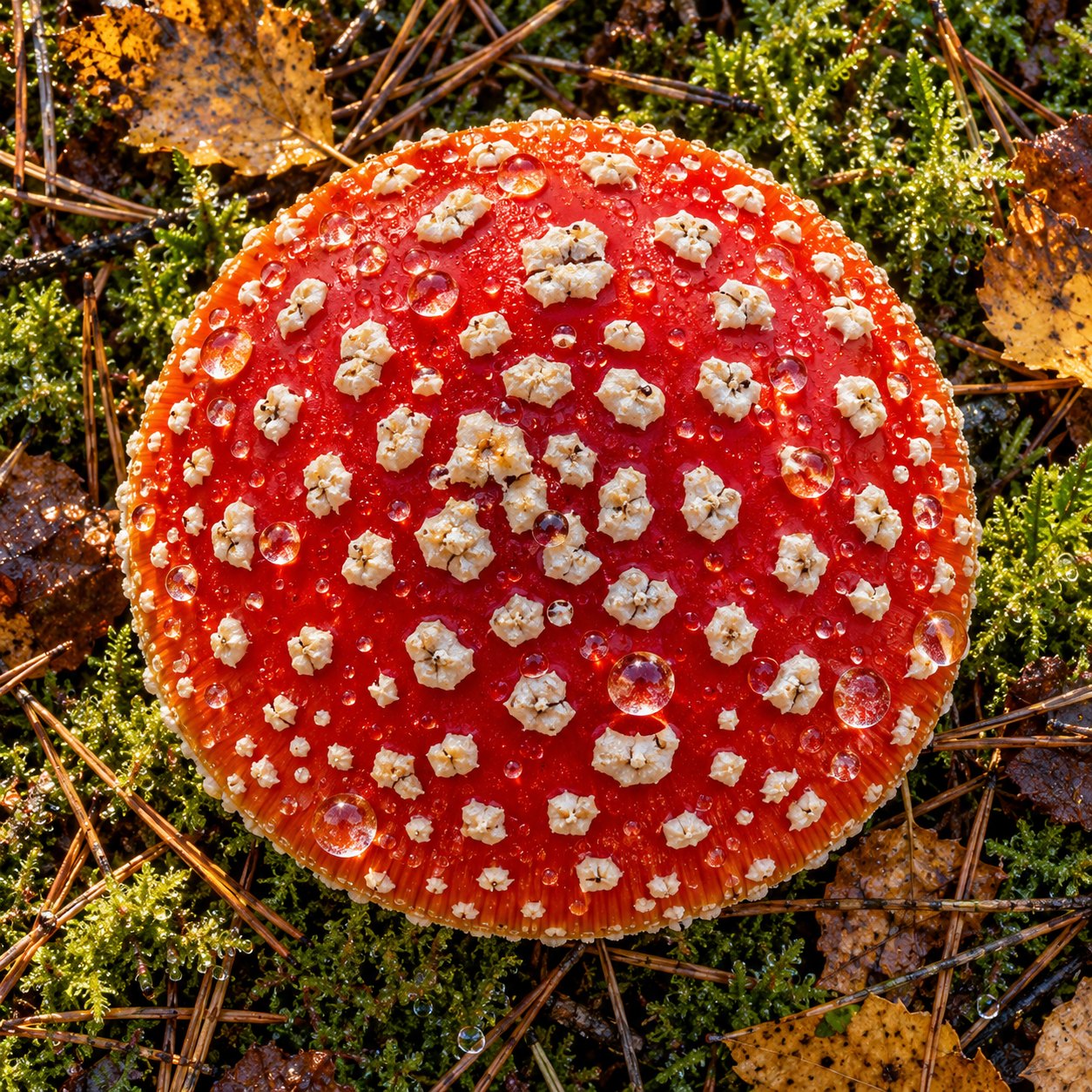
Fly agaric is not a “psychedelic” in the usual sense. It does not act on serotonin the way psilocybin does. Its main substances work on the brain's two main systems: excitation and inhibition.
The main substance in the fresh mushroom. It excites the nervous system, enters the brain and is partly converted to muscimol inside the body. In laboratories it is used as a tool for targeted destruction of neurons in animals.
The main psychoactive substance. A potent GABA-A receptor agonist; it calms and causes sleep. One of the main molecular probes used to study GABA receptors.
It gave the mushroom its scientific name, but there is very little of it, about 0.0003% of the mass. It does not enter the brain and has almost no effect.
How much active substance a mushroom contains
In samples from Japan the raw mushroom contained on average about 462 mg/kg of ibotenic acid, but the spread between samples is huge. According to Michelot (2003), caps contain about 990 mg/kg of ibotenic acid and 380 mg/kg of muscimol, stems 230 and 80. In spring and summer there may be up to 10 times more ibotenic acid and muscimol than in autumn. That is why grams of mushroom cannot be converted into milligrams of substance.
Tsunoda, 1993; Michelot, 2003; WikipediaActive dose estimates in the literature
| Source | Muscimol, oral | Ibotenic acid, oral |
|---|---|---|
| Ott, Pharmacotheon | 10–15 mg | 50–100 mg |
| Michelot, 2003 | 7.5–10 mg | up to 70 mg in one fresh mushroom (60–70 g) |
| Wikipedia | about 6 mg | 30–60 mg |
These are estimates of doses producing a pronounced effect in an adult, not recommendations. Sources differ by almost a factor of two. Onset is described from 30 minutes to 3 hours, duration 6–8 hours.
Other
Vanadium and amavadin
Fly agaric accumulates vanadium and stores it as the organometallic compound amavadin. Another poison, α-amanitin, is absent: this is the key difference from the death cap.
Synthesis
Ibotenic acid and muscimol were synthesised chemically in the 1960s–70s (Gagneux, Nakamura et al.). Muscimol is sold today as a high-purity laboratory reagent, and a whole class of synthetic substances was built on it (see “Pharma”).
A taste stronger than glutamate
Ibotenic acid is one of the most umami substances known. US patent 3,466,175 gives the taste threshold of ibotenic and tricholomic acids as about 0.003%, against 0.02% for monosodium glutamate, roughly 7 times lower. With nucleotides the effect is stronger still. It is not used as a food additive: the substance is neuroactive.
USPTO, patent US 3,466,175From mushroom to medicine
Muscimol became the basis of modern GABA research, and a sleeping drug that reached the final phase of trials was built on its molecule.
A tool for neurobiologists
Muscimol is recognised as a potent GABA-A agonist and became the standard molecular probe for studying these receptors. Ibotenic acid is used as a neuroexcitatory, neuron-destroying tool in animal experiments.
Merck IndexThe first doses of pure muscimol in a human
Swiss pharmacologist Peter Waser tested pure muscimol on himself. 5 mg had almost no effect, 10 mg produced mild intoxication after about 90 minutes, and 15 mg acted more strongly and faster, after about 40 minutes. Estimates of active doses still rely on these observations.
Leas, Aeon, 2026 (on Waser's self-experiment)Mapping the brain's GABA receptors
Labelled muscimol was one of the first tools used to find and count GABA receptors in the brain (Snodgrass, Nature, 1978). Since then muscimol has been a standard neuroscience reagent: it is used to switch brain areas in animals off temporarily and reversibly, to work out what they do.
Snodgrass, Nature, 1978; Wikipedia, MuscimolMuscimol and hormones
American researchers showed that muscimol stimulates the release of prolactin and growth hormone. It is one of the early clinical studies that helped explain how the GABA system controls hormones.
Neophytides, Chase, Frohman, J Clin Endocrinol Metab, 1978Gaboxadol (THIP)
Povl Krogsgaard-Larsen synthesised gaboxadol by modifying the muscimol molecule. The patent belonged to Lundbeck. In a test tube it is 25–40 times weaker than muscimol, but in living organisms only three times weaker, because it gets into the brain better. Unlike benzodiazepines and Z-drugs, it acts directly on the GABA receptor, especially on extrasynaptic α4β3δ receptors.
Wikipedia, THIPA sleeping drug that reached phase 3
Marike Lancel (Max Planck Institute) showed that gaboxadol improves sleep in rodents and, in 1997, in humans. Lundbeck and Merck took it to phase three. A dose of 5–10 mg worked moderately, 15–20 mg more strongly. It increased deep slow-wave sleep, did not disrupt REM sleep and almost fully offset the age-related decline in deep sleep in older men. It helped more with staying asleep than with falling asleep.
Wikipedia, THIP; ClinicalTrials.gov (MK0928)Why development was halted
One of the large three-month trials did not show sufficient efficacy. At high doses, in a study of people who use drugs, psychiatric side effects occurred in 15% on placebo, 38% on 15 mg, 72% on 30 mg and 88% on 45 mg. At working doses a rapid heartbeat was often noted. An FDA application was never filed. At low doses Hamilton Morris called it “the perfect sleeping pill”; at high doses it causes hallucinations.
Wikipedia, THIPA new attempt
Lundbeck sold the rights to Ovid (OV101), which tried to treat Angelman syndrome and fragile X syndrome. In 2021 the programmes were closed for lack of effect. Healx continues the fragile X research.
Gaboxadol in Angelman syndrome
In phase 2 (STARS: 88 adolescents and adults aged 13–49, double-blind and placebo-controlled, 12 weeks) gaboxadol significantly improved the overall clinical impression. On 15 mg at night patients fell asleep about 25 minutes faster, napped less in the daytime and walked better. Phase 3 (NEPTUNE: 97 children aged 4–12) did not repeat this: 0.7 points against 0.8 on placebo, and development was stopped in December 2020.
What to keep in mind. This is a synthetic molecule built on muscimol, not the mushroom. But these are the largest controlled human trials of a substance from the fly agaric «family».
Angelman Syndrome News, 2018 (STARS); Medthority, 03.12.2020 (NEPTUNE)Gaboxadol in fragile X syndrome
In the phase 2 ROCKET trial, young men aged 13–22 with fragile X syndrome took gaboxadol 5 mg in three regimens for 12 weeks. Behaviour on the ABC-FXS scale improved by 26%, and anxiety and mood on the ADAMS scale by 22%. There were no serious side effects, and 94% of adverse events were mild.
What to keep in mind. There was no placebo group, so expectation effects cannot be ruled out. Healx planned a further phase 2 together with sulindac but withdrew it in 2022 before enrolling anyone. The University of Cincinnati carried the work on (below).
NeurologyLive, 07.05.2020; ClinicalTrials.gov, NCT03697161Gaboxadol: one dose and brain rhythms
University of Cincinnati: 10 adult men with fragile X syndrome, a double-blind crossover study, one 10 mg dose of gaboxadol against placebo, at home and in the clinic. Gaboxadol strengthened resting theta and alpha brain rhythms in 80% of participants, at home just as in the lab. A single dose had little effect on auditory brain responses or behaviour. There were no serious side effects; fatigue was reported most often.
What to keep in mind. A pilot study: 10 people and one dose. Part of its value is showing that such measurements can be done at home.
De Stefano et al., J Neurodev Disord, 2026; ClinicalTrials.gov, NCT06334419; NCT04823052 (Healx)Huntington's disease
A double-blind study of muscimol in 10 patients showed no improvement in movement or thinking; in one patient the chorea decreased. Side effects increased with the dose.
Shoulson et al., 1978Tardive dyskinesia
Eight people with tardive dyskinesia, involuntary movements after long-term antipsychotic use, took 5–9 mg of muscimol by mouth. The involuntary movements were consistently reduced, usually without sedation.
What to keep in mind. Eight people and no control group. No larger follow-up trials were run.
Tamminga, Crayton, Chase, Archives of General Psychiatry, 1979Parkinsonism
Small doses of muscimol, injected by a neurosurgeon directly into the subthalamic nucleus, temporarily relieved the symptoms of parkinsonism.
Levy et al., 2001Muscimol straight into the epileptic focus
At the US National Institutes of Health (NINDS), muscimol was delivered through a thin catheter directly into the seizure focus of people with drug-resistant epilepsy before planned surgery. This was a phase 1 study in three patients, looking at safety and seizure frequency. No brain injury from the infusion was found and surgical outcomes did not suffer. Seizure frequency fell in one of the three patients, but the authors did not confirm reliable seizure suppression (Heiss et al., Neurosurgery, 2019). The registry lists the study as terminated early.
What to keep in mind. This is neurosurgical delivery of tiny amounts into the brain, not eating the mushroom.
ClinicalTrials.gov, NCT00005925; Heiss et al., Neurosurgery, 2019; Alternative Pharm Press, 2026Next door: psilocybin, and why it is not fly agaric
In April 2026 a presidential executive order required the FDA to speed up review of psilocybin and ibogaine, and Compass Pathways reported a positive phase three with synthetic psilocybin: 258 patients with treatment-resistant depression, a single 25 mg dose; at week six MADRS scores were 3.6 points lower than in the placebo group. The drug has “breakthrough therapy” status. There is no approval yet.
What does not apply to fly agaric. The order does not mention fly agaric or mushrooms in general, only psilocybin. The trials use a purified synthetic substance, in a clinic with a therapist, and it acts through serotonin, not GABA. Psilocybin's successes do not carry over to fly agaric.
NPR, 18 April 2026; Compass Pathways (Nasdaq), 2026Research
Here we have gathered every study we found: clinical, laboratory and observational. The collection is updated continuously. Fly agaric substances have already been tested in controlled human trials, but there are no placebo trials yet in which people took the mushroom itself.
What has already been tested in humans
Muscimol was given to people with tardive dyskinesia (1979, involuntary movements decreased), parkinsonism (2001) and epilepsy (2019). Gaboxadol, built on muscimol, went through double-blind placebo-controlled trials: it deepened sleep, improved the condition in Angelman syndrome in phase 2, and in 2026 changed brain rhythms in fragile X syndrome. Details in the «Pharma» section.
What is still missing. Placebo-controlled trials in which people take the dried mushroom itself. The 2026 Ordak review calls this the main gap and calls for such studies.
Ordak, Frontiers in Pharmacology, 2026What is called promising
A 2025 review (Grochowska et al.) names it as potentially useful for depression, anxiety disorders, sleep disorders, autism spectrum disorders and addictions. This is a list of directions, not proven effects.
Grochowska et al., Health Problems of Civilization, 2025Experiments on cells and rodents
Reviews describe neuroprotective, liver-protective and anti-inflammatory effects and effects on memory. A beta-glucan from fly agaric showed antitumour activity in mice.
But there is an opposite result too. In a 2023 study (NRC Canada and the University of Alberta), a commercial fly agaric extract increased inflammatory signals in a human microglial cell line. The work was done on cells, with only three replicates and no human study.
Michelot, 2003; Matt, 2026; Wagner et al., Frontiers in Pharmacology, 2023Neuron protection and brain blood vessels
A tincture of fly agaric caps (muscimol 2 mg/kg) in mice given rotenone, a toxin that damages neurons as in Parkinson's disease: the oxidative stress marker MDA rose by 110% in the controls but was 38% lower with the tincture, and reduced glutathione was preserved 42% better. On an isolated rat basilar artery the tincture lowered tone by about 25%, pure muscimol by about 30%.
What to keep in mind. Six animals per group, the mushroom and pure muscimol were not compared separately in mice, and there were no motor tests or dopamine measurements. The link to Parkinson's symptoms is indirect.
Kondeva-Burdina et al., Pharmacia, 2026Muscimol and neuropathic pain
A meta-analysis of 22 preclinical studies (19 in rats, 3 in mice). Muscimol reduced mechanical allodynia (SMD 1.78) and thermal hyperalgesia (SMD 2.59); the effect began after 15 minutes. The thermal effect stops being significant 60 minutes after administration.
What to keep in mind. Pure muscimol was administered, most often into the spinal canal, not eaten as a mushroom. The spread between studies is large, the quality of the studies themselves was rated low, and certainty under GRADE is moderate after downgrading.
Ramawad et al., Korean Journal of Pain, 2023Muscimol and inflammation
In mice with inflammation caused by a bacterial toxin, muscimol lowered TNF-α, IL-1β and IL-12, raised anti-inflammatory IL-10 and improved survival. GABA and cholinergic receptor blockers did not remove the protection, so the authors speak of partial independence from these receptors.
What to keep in mind. One model and one cell line. This does not contradict the 2023 study above, where a commercial mushroom extract increased inflammatory signals in human cells: the pure substance and the whole extract act differently.
Can J Physiol Pharmacol, 2022; 100(7):665Pain relief through the spinal cord
Rats were given muscimol into the spinal canal. A small dose of 0.25 µg lengthened the time before the tail was pulled away from heat, without impairing movement. In the hot-plate test there was no effect.
Hammond, Drower, European Journal of Pharmacology, 1984Three weeks of protection against seizures
Rats received muscimol into the subthalamic nucleus for three weeks through an implanted pump. Protection against seizures lasted all three weeks, and the share of responders rose with the dose. Side effects: temporary unsteady gait and weight loss.
What to keep in mind. This is a neurosurgical model for future epilepsy implants, not taking the mushroom.
PubMed 36736200, 2023An implant that stops seizures
New York University researchers delivered muscimol directly onto the surface of the cortex through an implanted device. In rats it completely prevented focal seizures, and in monkeys too. The animals ate normally, with no noticeable behavioural side effects. The authors call muscimol a promising agent for future implants in focal epilepsy.
What to keep in mind. A conference abstract: 17 rats and 3 monkeys.
Baptiste et al., American Epilepsy Society, 2008Muscimol helps unlearn fear
Israeli researchers gave rats a small dose of muscimol into the prefrontal cortex and the amygdala. The animals stopped fearing a signal that used to predict an unpleasant stimulus faster, and the effect lasted at least 48 hours. This kind of fear extinction is the basis of therapy for post-traumatic stress disorder and phobias.
What to keep in mind. Delivery straight into animal brains, not eating the mushroom.
Akirav, Raizel, Maroun, European Journal of Neuroscience, 2006Microdoses and memory in rats
At the Chita State Medical Academy, rats were given ground, detoxified fly agaric caps in microdoses for 31 days, while a control group received a placebo. In a radial maze their spatial memory was on average 7% better. The authors cautiously suggest a possible nootropic effect.
What to keep in mind. A student project with 6 rats per group and a wide spread. Safety was not studied.
Chetyrkina, Bychkov, Chita State Medical AcademyToxicology in rats
Korean researchers gave rats fly agaric once at doses up to 33 mg/kg and repeatedly for 3–4 weeks. At the highest dose, coordination and pain response worsened after 2–3 hours, but values returned to normal after 4 hours. With repeated dosing, liver enzymes rose and tissue changes were found in the kidneys.
What to keep in mind. This result does not favour the mushroom, and we report it honestly. The summary does not give the repeated doses.
Kim et al., Journal of Life Science, 2009Mushroom extracts in the test tube
Three recent studies with whole extracts. A water-alcohol extract suppressed lung cell cultures even though it contained almost no ibotenic acid or muscimol (Molecules, 2023). An acetone extract triggered apoptosis, programmed cell death, in choriocarcinoma cells (Kragujevac Journal of Science, 2024). An ethanol extract showed high antioxidant activity: 97% DPPH radical inhibition at 1000 µg/mL against 94.7% for ascorbic acid, while its antimicrobial action was weak (Caucasian Journal of Science, 2026).
What to keep in mind. These are cells in a test tube and high concentrations. The figures cannot be carried over to humans.
Molecules, 2023; Milojević et al., 2024; Gören et al., 202690 days of extract with no signs of poisoning
The Canadian company Psyched Wellness reported that animals were given its fly agaric extract AME-1 daily for 90 days. No signs of toxicity, deaths, or changes in weight, blood or organs were found, and a no-adverse-effect level (NOAEL) was set. The release does not name the species or the doses.
Later the company reported two more studies. In 2022, with the National Research Council of Canada (NRC): in the test tube, AME-1 protected microglial cells from inflammatory damage, more strongly at higher concentrations. In 2023 the contract lab KGK ran behavioural tests with the extract alone and together with alcohol: according to the company, memory, coordination and balance did not worsen. The releases contain no figures. The company's scientific advisory board includes Professor David Nutt, one of Britain's best-known psychopharmacologists.
What to keep in mind. This is a company press release, not a peer-reviewed paper.
Psyched Wellness, 15.02.2022; Psyched Wellness and NRC, 2022; Psyched Wellness and KGK, 2023; Technology NetworksWhy the dose varies from mushroom to mushroom
The review proposes treating the ratio of ibotenic acid to muscimol as a variable trait: it can change with developmental stage, drying and growing conditions. Best confirmed is the effect of drying and heating, which convert ibotenic acid into muscimol. The role of drought, soil, nitrogen, heavy metals and the host tree is so far only assumed.
Günther, Bednarczyk-Cwynar, Molecules, 2026 (the preprint was not peer-reviewed)A survey of 684 users
Polish researchers analysed 5,600 posts in Facebook groups. Detailed figures are given in the “Use” section.
Ordak et al., Toxics, 2023More than 3,000 people on Telegram
A survey for the book “Microdosing with Amanita Muscaria” (Baba Masha, with James Fadiman). For a number of complaints, 70% or more reported benefit. Participants volunteered themselves; there was no control group.
95 members of online groups
Main reasons for use: perceived therapeutic benefit, spiritual needs and improved cognitive function.
Pieta-Chrystofiak, Brohs, 2023Depression, anxiety, sleep
A woman of about 30 took dried fly agaric on a tapering schedule for 3.5 months and reported reduced depression, anxiety and sleep problems. Blood tests were normal. A preprint, not peer-reviewed.
Turkia, 2023Third among psychedelics in the US
A representative RAND survey (September 2025) found that 1.34% of American adults had used fly agaric in the past year, about 3.5 million people. That puts it third after psilocybin and MDMA, ahead of ketamine and LSD.
RAND, January 2026What people write on Reddit
A qualitative analysis of Reddit discussions (Hartwig et al., Substance Use & Misuse, 2025) found that interest in fly agaric rests mainly on benefits people notice in everyday life. Most often the mushroom is brewed as a tea.
Hartwig et al., 2025 (via NDEWS, 2026)The first observational study of microdosing
Nora Mamblona Fischer, a doctoral candidate at the California Institute of Integral Studies (CIIS), is collecting data from people who took low doses of fly agaric at least 4 times over 4 weeks. Their state before and during use is compared on standard scales: depression, anxiety and stress (DASS-21), well-being (WHO-5), sleep (PROMIS) and pain (PEG-3). The target is 80–120 participants, the CIIS ethics committee has approved the study, and data were collected in spring and summer 2026. No results yet.
amanita-studie.deWhat microdosing showed in a blinded experiment
This study was not on fly agaric but on LSD and psilocybin, yet it matters for any microdosing: 191 participants mixed dose capsules and placebos themselves. Wellbeing improved equally in both groups; expectations played a large role. There is no such experiment for fly agaric.
Szigeti et al., eLife, 2021 Moss, lingonberries, blueberries
Use and experience
How fly agaric is used and what people who have taken it for a long time report. These are self-reports, not a proven effect.
Where and how it was used
Siberia
Rituals and endurance. Dried caps, infusions, milk.
Japan, Nagano
The mushroom is salted, pickled and eaten. In 1993 Kojun Tsunoda described how local people process it. Boiling for ten minutes and pouring off the water markedly reduces the toxin content; additional soaking removes another 59–64%. In 2008 William Rubel and David Arora proposed regarding fly agaric as edible when properly prepared.
Tsunoda, 1993 (via Rubel's review); WikipediaPoland and Russia
Alcohol tinctures and rubs for joint, skin and gut complaints. Today the tincture remains the second most popular form after the dried mushroom.
Microdosing
Taking small doses of the dried mushroom. Main reasons: stress, insomnia, depressive symptoms, pain.
Why people take it (survey, n = 250)
In what form (n = 198)
What was noted as side effects (n = 236)
Source: Ordak et al., Toxics, 2023, analysis of 5,600 Facebook posts, 684 people. Reasons, forms and side effects refer to different subgroups of people, and one person could name several. Women more often named pain and skin problems, men stress, depression and insomnia. These are unverified self-reports; age and doses were not collected.
What remains unknown
There is no composition standard: the strength of the mushroom varies several-fold with season, place, age and drying method. Self-reports contain no measured doses. There are no data on long-term use. Placebo trials have been run only with the mushroom's substances (see «Pharma»), not yet with the mushroom itself.
Benefits
The harms are covered above. Here is why people take fly agaric, and how well each claim is tested.
People most often name stress relief, sleep, mood and pain. Fly agaric substances have already been tested in controlled human trials, and the directions scientists are studying match what people themselves report.
60 years of research: from mushroom to medicine
The dot colour shows how well each event is supported, as in the legend at the top of the page. Tap an event to jump to the details.
- 1964–65Active substances found: ibotenic acid and muscimolscience
- 1967First doses of pure muscimol in a human (Waser's self-experiment)self-experiment
- 1977Gaboxadol is created from muscimolsynthesis
- 1978Muscimol is used to map the brain's GABA receptorsneuroscience
- 1979Muscimol reduces involuntary movements in tardive dyskinesiaclinic, 8 people
- 1997Gaboxadol deepens sleep in humansclinic
- 2001Muscimol in the brain briefly eases parkinsonismclinic, small group
- 2006Muscimol helps rats unlearn fearlaboratory
- 2007Gaboxadol as a sleeping pill halted after phase 3halted
- 2008Muscimol implants stop seizures in animalslaboratory
- 2018Phase 2: gaboxadol helps in Angelman syndromeclinic, 88 people
- 2020Phase 3 does not repeat the success; behaviour improves 26% in fragile Xmixed results
- 2023Analysis of 684 users: stress, sleep, mood, painpeople's accounts
- 20253.5 million Americans in a year (RAND)national survey
- 2026Gaboxadol changes brain rhythms; first microdosing study beginsclinic
Deep sleep
Gaboxadol, a compound built on the muscimol molecule, reached phase 3 trials as a sleeping pill. It increased deep slow-wave sleep, did not disturb REM sleep and in older men almost fully restored the age-related loss of deep sleep. This is evidence for a related molecule, not for the mushroom.
Wikipedia, THIPStress, sleep, mood, pain
In a Polish analysis of posts by 684 users, the most common reasons were stress relief (29.6%), insomnia (22.4%), depressive symptoms (20.4%) and pain (18.4%). In a survey of over 3,000 members of a Telegram community, 70% or more reported improvement for a range of complaints. These are self-reports with no control group.
Ordak et al., Toxics, 2023; Baba Masha, 2022Depression, anxiety, sleep
A woman of about 30 took dried fly agaric on a tapering schedule for 3.5 months and reported less depression and anxiety and better sleep. Her blood tests stayed normal.
Turkia, 2023Nerve pain
22 preclinical studies: muscimol reduced pain from touch and heat after nerve injury. It was mostly injected into the spinal canal rather than given as mushroom.
Ramawad et al., 2023Inflammation and neuron protection
In mice, muscimol lowered inflammatory signals and improved survival. A cap tincture protected mouse neurons from oxidative stress and relaxed rat brain arteries.
Can J Physiol Pharmacol, 2022; Kondeva-Burdina et al., 2026What scientists want to test
A 2025 review names depression, anxiety disorders, sleep problems, autism spectrum disorders and addictions as promising directions.
Grochowska et al., 2025The site author's experience
Andrey Petrovich is in his sixth year of fly agaric microdosing and talks about his experience in TikTok live streams. He advises his customers to get lab tests before starting and after three months, to see changes in numbers, not only in how they feel.
Honestly about benefits. People report benefits often and in large surveys, laboratory data explain them through the GABA system, and human trials of muscimol and gaboxadol showed effects on sleep, movement and behaviour. There are no placebo trials of the mushroom itself yet, and in a blinded study of microdoses of other substances part of the effect came from expectations (Szigeti et al., 2021). We follow new studies and add them as they appear.
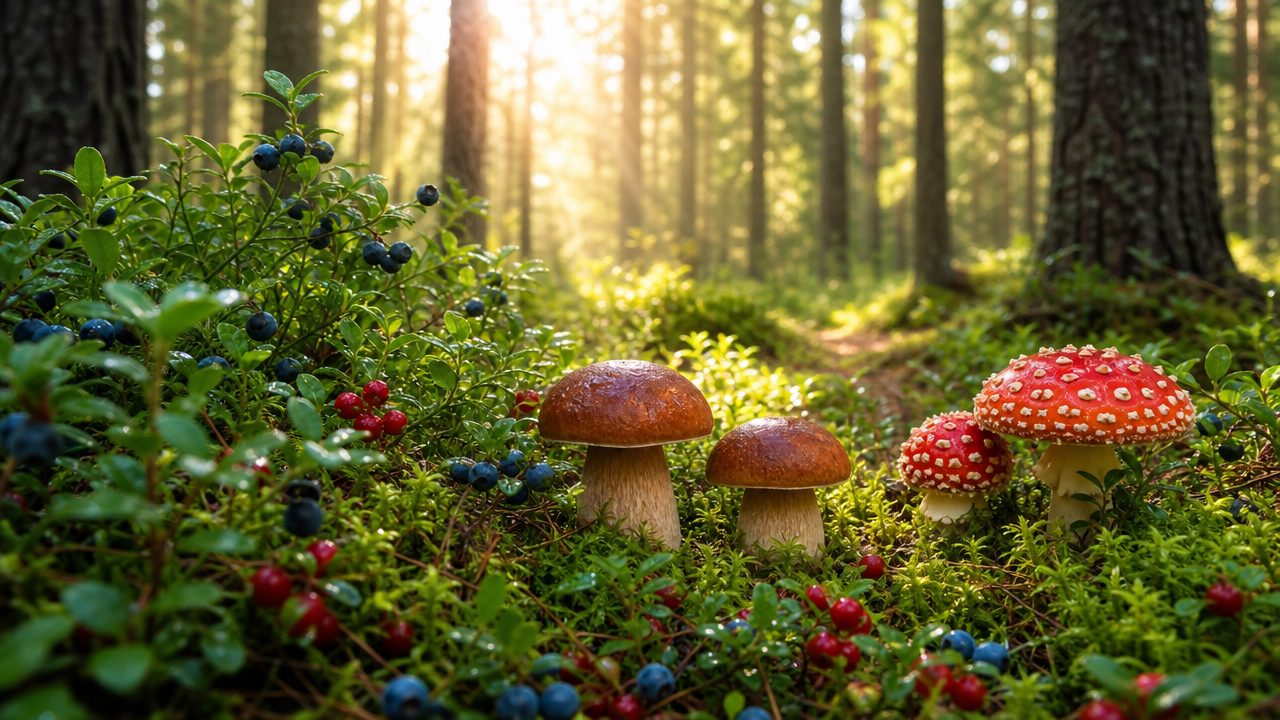 Light between the trunks
Safety in numbers
Facts first: there are no reliably documented deaths from fly agaric in the registries. Next, a comparison with what people take every day, and where the risk is nevertheless real. The decision is yours.
What the registries show
No confirmed deaths in 100 years
Based on about 2,000 cases in its registry, the North American Mycological Association (NAMA) stated that in the last 100 years there have been no reliably documented human deaths from the toxins of these mushrooms (Beug et al., 2006). David Arora calls the claim that the mushroom is deadly a mistake.
Beug et al., 2006; Fungi, 2018; WikipediaNAMA annual reports
2006: about 13 people affected by fly agaric and panther cap, no deaths. 2013: of 67 reports about people for all mushrooms, 6 people were hospitalised because of fly agaric, no deaths.
NAMA Toxicology Reports, 2006 and 2013Oregon Poison Center
Over 15 years, 34 cases involving muscimol-containing mushrooms: 23 fly agaric, 10 panther cap, 1 another species. 25 people had symptoms and five were intubated. There were no deaths, seizures, low blood pressure, or kidney or liver injury. The panther cap caused symptoms far more often than the fly agaric, for example reduced consciousness in 70% versus 35%.
Moss, Hendrickson, Clinical Toxicology, 2019Where the real danger among mushrooms lies
In the US from 1999 to 2016, 133,700 cases of mushroom poisoning were recorded, 704 severe and 52 deaths, mainly from mushrooms containing cyclopeptides (the death cap and its relatives).
Stoeva-Grigorova et al., Toxins, 2025How it usually goes
Symptoms appear after 30–90 minutes, peak in the first three hours, and most people return to normal within 12–24 hours. Treatment is supportive. Severe cases are described but rare. The estimate of about 3.5 million users of fly agaric products in the US in 2025 shows the scale: against that background there are few recorded severe cases, although registries are far from complete.
The old “2–5%” figure
Some reviews give an estimated mortality of 2–5% among recorded poisonings (a quote from 2017). Modern registries show markedly less. If you come across that figure, check which era and which country the data are from.
For comparison
Alcohol and drugs in numbers
According to WHO data for 2019, about 2.6 million people die from alcohol worldwide each year, 4.7% of all deaths. About 0.6 million die from psychoactive drug use. About 77% of alcohol deaths are among men.
WHO / PAHO, 2024What is most harmful
British experts rated the harm of 20 substances on 16 criteria, including harm to the user and to others. Alcohol received the highest overall score (72 out of 100), heroin 55, crack 54. Alcohol is especially harmful to other people: families, bystanders, people in accidents.
Nutt et al., The Lancet, 2010What this means and what it does not
The comparison shows scale, not safety. Fly agaric is psychoactive, poorly standardised, and unsuitable for children, pregnant women and people who take sedatives or drink alcohol. At the same time, the registries show no mass mortality from fly agaric of the kind seen with alcohol and hard drugs, and an adult has the right to weigh this up for themselves.
Addictions: a direction, not a result
Reviews list addictions among the areas where muscimol is worth studying. There are no controlled trials, and people's accounts that fly agaric helped them drink less have not yet been verified anywhere. If you have an addiction, that is a question for a doctor, not for an experiment.
Grochowska et al., 2025
Where the risk is real
- Adulterated products. A 2024 CDC report: gummies sold as “fly agaric” also contained psilocybin, stimulants and painkillers. In December 2024 the FDA stated that fly agaric may not be added to food. Germany's BfR warned in 2025 about products that look like sweets, especially with regard to children.
- Isolated severe cases. In 2022 the death of a 44-year-old man who had taken dried caps was described (Meisel et al.). In 2025 an elderly couple fell into a coma after home preparation; both recovered fully.
- Confusion with other mushrooms. The 2025–2026 outbreak in California (CDC, May 2026): 39 cases, 4 deaths. The culprits were deadly amatoxin-containing amanitas, not fly agaric. Their toxins and symptoms are different, so the two should not be confused.
- Combinations. Muscimol acts on the same inhibitory system as alcohol, sleeping pills and sedatives. Together they reinforce each other.
- Children and animals. According to NAMA, cats often die; dogs under certain conditions (small, old, large portions, treatment errors).
- Heavy metals. Polish samples contained cadmium above the limits for dietary supplements, more of it towards the end of the season. Water-based and fermented preparations reduce the content.
- Laws. Bans are spreading fast: since 2025, Lithuania, Poland, Sweden, Czechia and France have banned muscimol. Country-by-country details in the “Legal status” section.
Legal status
Where fly agaric and its substances are banned, where they are allowed, and with what conditions. This section is updated regularly.
Last checked: 28 October 2026

Why it is banned
Fly agaric was hit not by a wave of addiction but by acute poisonings from sweets found to contain untested chemicals, including synthetic substances. The forest mushroom paid for products sold under its name.
What is known about addiction
We found no study describing fly agaric addiction as a widespread problem, and no treatment programme for it. In the medical literature we came across one case: a 29-year-old man increased his dose for three weeks and developed atrial fibrillation after stopping. A lack of data does not prove that addiction never happens: there are no controlled studies. But unlike alcohol, tobacco and opioids, fly agaric creates no mass demand for treatment.
Contino et al., Circulation, 2023; Ordak, Frontiers in Pharmacology, 2026The main reason: sweets
In 2024 in the US, Diamond Shruumz mushroom chocolate and gummies caused an outbreak: 180 people ill in 34 states, 73 hospitalised, 3 possible deaths. Muscimol was found in some products, but it did not explain all the symptoms: other substances were present too. In France, ANSM introduced its ban after a series of serious poisonings, mainly from gummies.
CDC; Texas DSHS, 2024; ANSM, 2026What was actually in the sweets
FDA lab tests showed the Diamond Shruumz sweets were not mushroom but a chemical mix. They contained a synthetic psilocin analogue (acetylpsilocin), psilocin itself, the prescription drug pregabalin and kava kavalactones. Muscimol was not in every sample. Independent labs found stimulants and new synthetic compounds in other brands. The regulator did not say whether the muscimol came from mushrooms or a lab, but muscimol has long been synthesised chemically and sold as a reagent. The poisonings were caused not by the forest mushroom but by products with untested, banned and prescription substances.
FDA, 2024; NPR, 20.08.2024Products look like candy
In the Texas part of the outbreak, 37% of those affected were under 13. In 2025 Germany's BfR warned precisely that such products look like sweets and are dangerous for children.
Texas DSHS, 2024; BfR, 2025Strength is unpredictable
Muscimol content in mushrooms from different seasons varies up to tenfold, and there are no testing standards. A regulator cannot check how much substance a package holds, so it bans the substance outright. The French decision cites a risk of accidental overdose and a risk of abuse: that is the regulator's assessment, not a count of addicted people.
Michelot, 2003; ANSM, 02.07.2026The market grew faster than science
Interest in fly agaric has multiplied (Google searches +114% in a year, about 3.5 million consumers in the US). There are no clinical trials, so regulators ban as a precaution without waiting for data. They did the same earlier with kratom and synthetic cannabinoids.
Leas et al., 2024; RAND, 2026How to avoid a fake
If chemicals were added to sweets, nothing stops anyone treating dried mushrooms or powder the same way, and you cannot see or smell it. So choose reliable, proven suppliers: people who pick and dry the mushroom themselves and can show it. Buy whole dried caps, not powder, capsules or sweets that hide what is inside. Avoid products promising a “strong effect” or stating a muscimol dose: in the natural mushroom it varies from season to season.
Michelot, 2003The honest conclusion. Fly agaric is psychoactive and poisonous, and acute poisoning is real. But the bans respond to poisonings and to a market of sweets with untested contents, not to addiction: there is no evidence of widespread addiction to fly agaric. The main risk today is not the mushroom itself but unknown chemicals in products sold as mushroom.
What exactly can be banned
The mushroom itself is on a list of prohibited plants and fungi. Both fresh and dried mushrooms are banned.
Muscimol and ibotenic acid are on lists of narcotics or psychoactive substances. Then anything containing them is banned: extracts, gummies, capsules. Whether the ban covers the dried mushroom depends on the country and on how courts read it.
Sale for consumption. The mushroom is not a narcotic, but it may not be sold as food, a supplement or a product “for the effect”. Raw material can still be sold legally.
The mushroom itself is banned
Since 1 December 2008
Fly agaric and panther cap are on List II of the Opium Act (Opiumwet). Buying, selling and possession are prohibited.
Staatsblad 2008, 486Since 2010
Amanita muscaria is in Table III of Drug Law 143/2000. Trafficking carries 3 to 15 years in prison.
avocatnet.ro, 2010; ICEERSSince 2005, tightened in 2025
Since 2005 fly agaric has been listed as a “hallucinogenic plant” (R.S. 40:989.1), allowed only for decorative purposes. Since 2025, products containing muscimol or ibotenic acid are banned separately (R.S. 40:989.5): 2 to 10 years for distribution, up to 5 years for possession.
Louisiana Legislature; LAPPA, March 2026Muscimol and ibotenic acid are banned
Since 1 January 2025
Both substances are on List I of narcotic and psychotropic substances (Health Minister's Order No. V-1403). Possession without intent to sell carries up to 2 years in prison, distribution up to 15 years. Even picking fly agarics in the forest is fined.
For transport: the overland route from Latvia to Poland and on into Europe runs through Lithuania. Lithuanian customs seizes parcels of dried fly agaric.
TAR 2024-23650; tv3.lt, 2025; 77.lt, 2026Since 22 May 2025
Both substances are on the list of new psychoactive substances (Dz.U. 2025 poz. 598). Trading carries 6 months to 8 years in prison, up to 12 years for large amounts. Possession is also an offence.
Dz.U. 2025 poz. 598; GISSince 11 July 2026
An ANSM decision of 2 July 2026 placed both substances and products containing them on the list of psychotropics. Production, sale and use are prohibited: up to 5 years and a €375,000 fine. Lawyers disagree on whether the ban covers the dried mushroom.
ANSM, decision of 02.07.2026Since 30 December 2025
Muscimol is classified as a narcotic. Ibotenic acid was not included.
Regeringen, November 2025Since 16 December 2025
Muscimol is on the list of controlled psychoactive substances (Government Regulation 534/2025 Sb.). Extracts, gummies and other processed products may not be sold. Unprocessed mushrooms that contain muscimol naturally are exempt. Back in September 2024 the SZPI inspectorate pulled muscimol gummies from sale as harmful to health.
Sbírka zákonů 534/2025; SZPI, 04.09.2024Mushroom allowed, but not as food or “for the effect”
Fly agaric is not a controlled drug, and simple possession is not an offence. But selling, producing, importing or exporting it for its psychoactive effect falls under the Psychoactive Substances Act 2016: up to 7 years. Selling it “as a souvenir” does not help if the seller knows it will be consumed.
Psychoactive Substances Act 2016; 2cb.com, October 2026At federal level, fly agaric, muscimol and ibotenic acid are not scheduled by the DEA. Since 18 December 2024 the FDA prohibits adding them to food. In 2025 the agency sent a warning letter to a seller of capsules, a tincture and chocolate. Ban bills in Texas and Utah failed.
FDA, 18.12.2024 and 11.09.2025; LAPPA, 2026Neither the mushroom nor muscimol is listed in the Narcotics Act (BtMG) or the New Psychoactive Substances Act (NpSG). It may not be sold as food or a supplement: fly agaric has no EU novel food authorisation. On 27 June 2025 the BfR warned about muscimol gummies.
BfR, Mitteilung 021/2025In 2023 the Ministry of Health banned the import, sale, storage, transport and use of food products containing fly agaric.
Zerkalo, 12.03.2024Fly agaric, muscimol and ibotenic acid are not on the list of narcotic drugs (Decree No. 681). However, the consumer watchdog Rospotrebnadzor uses the courts to stop sales of dried fly agaric, powders, capsules and tinctures as food or supplements, and blocks such websites.
Legal overview, August 2026Not a narcotic: picking, possession and sale are not banned by drug laws. Selling it as food probably breaches food law, because the mushroom is poisonous.
RUSinfo, 2022Not controlled
As of the check date, neither the mushroom nor muscimol nor ibotenic acid is named in Latvia's lists of controlled substances. List I contains a general entry for “hallucinogenic mushrooms”, but the State Agency of Medicines (ZVA) applies it to mushrooms containing psilocybin and psilocin. Some international databases (2cb.com) still mark Latvia as a country with controls, so keep an eye on updates. Fly agaric is sold as a raw material: not as a medicine, a food or a dietary supplement.
LV portāls (ZVA), 2021; 2cb.com, 2026According to Canadian lawyers, in 2022 Health Canada added fly agaric to its natural health product ingredients database, and sales are regulated like such products.
PsychedelicLaw.caUnclear or still being checked
Many sources say muscimol is in Schedule 9 (prohibited substances) of the Australian Poisons Standard. We have not yet confirmed this in the text of the standard. Until then, assume import is prohibited.
According to the 2cb.com database (October 2026), neither the mushroom nor muscimol nor ibotenic acid is on Estonia's lists of narcotic and psychotropic substances. We are still checking the primary source.
2cb.com, 2026According to 2cb.com (October 2026), fly agaric is not named in any annex of Finland's narcotics decree. We are still checking the primary source.
2cb.com, 2026Italy, Spain, Ukraine, Japan, Thailand and other countries. We will add them as we check primary sources.
Sources for this section
- Staatsblad 2008, 486 (Netherlands)
- Avocatnet.ro: list of banned plants, 2010 (Romania)
- Louisiana R.S. 40:989.5
- LAPPA: Fly Agaric Fact Sheet, 2026 (USA)
- 77.lt: fly agaric on the narcotics list (Lithuania)
- tv3.lt: musmirės (Lithuania)
- Nasha Niva, 2024: Lithuanian customs seizes fly agaric parcels
- Muscymol i kwas ibotenowy, Dz.U. 2025 poz. 598 (Poland)
- ANSM: decision of 02.07.2026 (France)
- Regeringen: classification of 10 substances, 2025 (Sweden)
- Muscimol a zákon v ČR, 534/2025 Sb. (Czechia)
- SZPI, 04.09.2024 (Czechia)
- Amanita muscaria in the United Kingdom, 2026
- FDA, 18.12.2024 (USA)
- Fliegenpilz legal in Deutschland? 2026 (Germany)
- Zerkalo, 2024 (Belarus)
- Fly agaric and the law in Russia, 2026
- RUSinfo (Norway)
- PsychedelicLaw.ca (Canada)
- ZVA on hallucinogenic mushrooms, 2021 (Latvia)
- 2cb.com: legal status by country, 2026
Drying
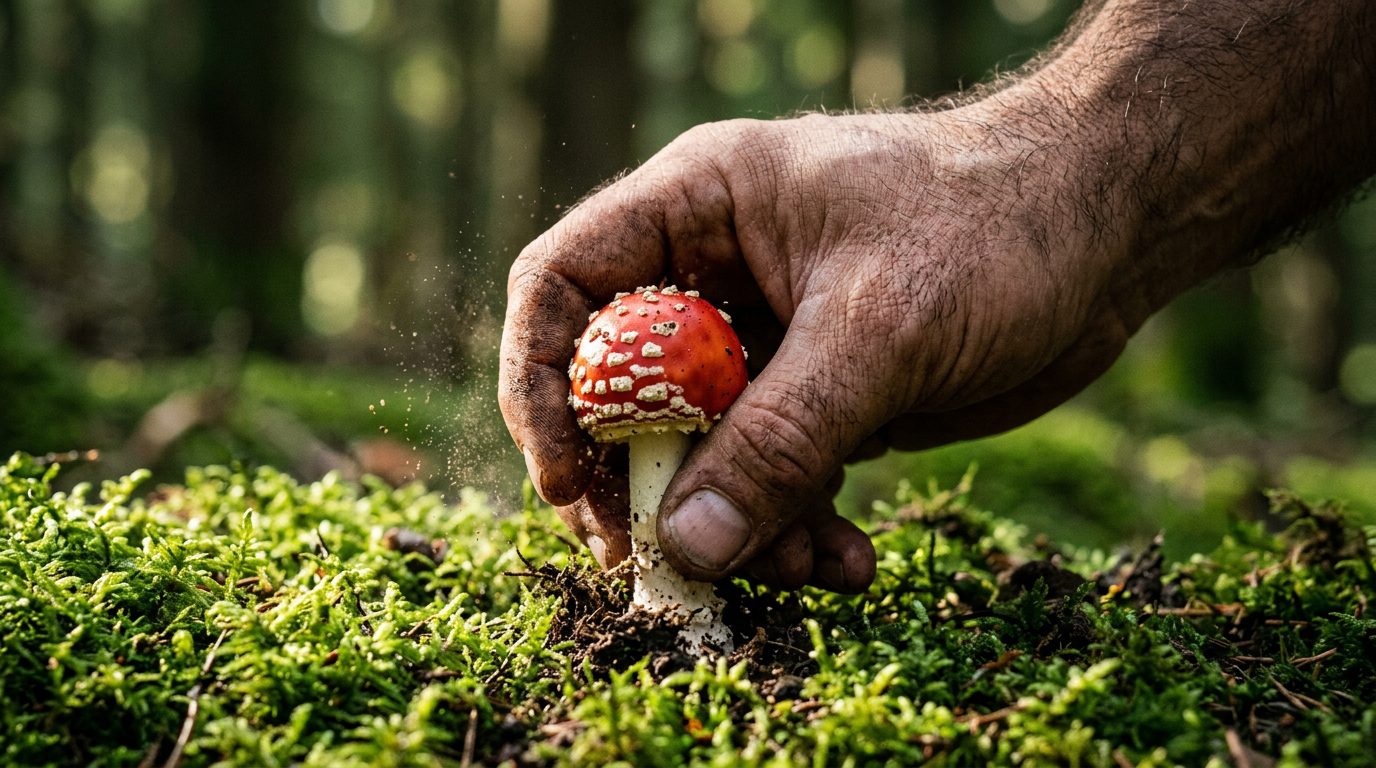
Drying does more than preserve the mushroom. It changes its composition, and that is exactly why dried fly agaric differs from fresh.
What happens during drying
The raw mushroom contains almost no muscimol. After three days of sun-drying, ibotenic acid halved, while muscimol in one sample rose twentyfold. The loss of ibotenic acid is not fully explained by conversion into muscimol. Eleven days of sun-drying made the mushroom edible in the measured amounts (according to the reviewer's assessment).
Both substances break down quickly at around 120 °C, but at that temperature texture and nutritional value suffer, so Rubel advises not drying above 55 °C.
Tsunoda, 1993 (via Rubel's review); Ordak, 2026Selection and cleaning
Young, whole mushrooms without worms, rot or mould are chosen. Soil and pine needles are removed with a brush or dry cloth, not washed with water: a wet mushroom dries longer and goes mouldy.
Laying out
Small caps are dried whole, large ones are cut into thin slices. They are laid out in a single layer on racks so that air can pass on all sides.
Temperature and air
Low temperature, no higher than about 55 °C, and a constant airflow from a fan. If dried too hot, the edges burn and the colour darkens. Air-drying in a warm, ventilated place also works, but a damp autumn slows drying and raises the risk of mould.
Ready or not
Finished caps are brittle and snap with a dry crack. If the mushroom bends or stretches, it is still moist and must not be sealed in a jar.
Storage
An airtight jar or zip bag, in a dark, dry place. If mould or a damp smell appears on the raw material, it is thrown away entirely.
Myths
What is said about fly agaric wrongly, in both directions: scare stories and dangerous misconceptions. For each myth, what is actually known.
How ibotenic acid becomes muscimol
The ibotenic acid molecule loses carbon dioxide (CO₂); this is called decarboxylation. The same ring remains without the acid group, and an “accelerator” resembling glutamate becomes a “brake” resembling GABA, the brain's main calming messenger. After three days of sun drying, one sample contained 20 times more muscimol. About 10–20% of ibotenic acid is converted in the stomach. In light, a small part breaks down into muscazone. (Tsunoda, 1993; Wikipedia)
Myths that scare for nothing
“Touch it or lick it and you're poisoned”
No cases of poisoning from touching or licking fly agaric appear in the registries and reviews available. Poisonings are described after people ate the mushroom, usually a lot of it. Still wash your hands after picking, especially around children.
Beug et al., 2006; Stoeva-Grigorova et al., 2025“One mushroom kills, like the death cap”
These are different poisons. The death cap kills with amatoxins, which destroy the liver within a day or two. Fly agaric has none: its compounds act on the brain, and most people recover within 12–24 hours. NAMA found no reliably documented deaths in 100 years. Severe cases do happen: a man's death after 6–10 dried mushrooms was described in 2022, and a 72-hour coma after about half a kilo in 2021.
Beug et al., 2006; Meisel et al., 2022; Rampolli et al., 2021“Eat a raw stem and you're poisoned”
Pickers say a raw stem eaten in the forest gives them energy. Chemistry explains it: stems hold a lot of ibotenic acid (about 630–2000 mg/kg) and little muscimol (80–290 mg/kg), and ibotenic acid excites rather than sedates. But mushrooms vary many-fold in strength, and raw mushroom is what most often causes nausea and vomiting. “Instant poisoning” is a myth, and so is “always safe”.
Tsujikawa et al., 2006; FDA, 2024“Muscarine is what works”
The mushroom is named after muscarine, but it contains about 3 mg/kg, a negligible amount, and muscarine does not reach the brain. The effect comes from ibotenic acid and muscimol, as was established in 1964–65.
Lurie et al., 2009; FDA, 2024“Ibotenic acid is a neurotoxin, muscimol is harmless”
Half true. Scientists use ibotenic acid to destroy brain regions in rats, but they inject it directly into the brain. That the mushroom eaten by mouth damages the human brain this way has not been shown. Muscimol cannot be called harmless: it acts from a few milligrams, and in mice the lethal dose by intraperitoneal injection is about 8 mg/kg. Fewer horror stories, but not a “safe” molecule either.
Schwarcz et al., 1979; Löscher, 1982
Brewing and storage
“Brew only below 50 °C”
Water boils at 100 °C, while ibotenic acid and muscimol begin to break down rapidly around 120 °C. Muscimol melts only at 184–185 °C. In a US patent, mushroom extract was heated at 90–100 °C for three hours, and the muscimol-to-ibotenic-acid ratio rose almost 200-fold: heating in water speeds up conversion rather than destroying the compound. Rubel's advice not to dry above 55 °C concerns the mushroom's taste and texture during drying.
Tsunoda, 1993; USPTO; Wikipedia“Lemon makes it stronger”
In the same patent, conversion ran in a strongly acidic medium (pH 2.6). Tsunoda also saw pH matter, though he described faster conversion in alkaline water (pH 10). A 2026 review calls the pH evidence limited. What lemon does in an ordinary cup has never been measured.
USPTO; Tsunoda, 1993; Günther, Bednarczyk-Cwynar, 2026“After a year, dried mushroom loses its strength”
Nothing supports this claim. What is known: after drying, much ibotenic acid remains, roughly 3 parts to 2 of muscimol, and a 2026 review calls their ratio variable, changing with residual moisture, light, oxygen and time. So slow conversion during storage is chemically possible. Sellers with many years of experience say aged mushroom becomes smoother and stronger. That is an observation, not an analysis: we found no published long-term storage measurements.
USPTO; Günther, Bednarczyk-Cwynar, 2026“Powder keeps only six months”
The “six months” figure is not based on analyses. Muscimol itself is a stable crystalline substance. Dried material is harmed by moisture (mould), light and air. Dry powder in a tightly closed jar or vacuum bag in the dark does not spoil for years, but how its strength changes over 5–20 years has never been measured.
Günther, Bednarczyk-Cwynar, 2026Myths that harm people
“It's natural, so alcohol is fine”
Muscimol acts on the same inhibitory system as alcohol, sleeping pills and sedatives. Together they amplify each other.
“Boiled means detoxified”
Boiling draws the compounds into the water, which is why the water is poured off when the mushroom is eaten as food. Even after boiling, ibotenic acid and muscimol remain in measurable amounts. And the broth is not a detoxified mushroom but an extract of it.
Tsunoda, 1993; FDA, 2024“Dried means a consistent dose”
Content varies from mushroom to mushroom and season to season up to tenfold, so the same grams give different effects.
Michelot, 2003The underground forest
The fly agaric is only the fruit. The main body of the mushroom lives underground, stretches between tree roots and may be structured like a neural network with no centre.
the total length of arbuscular fungal networks in the soil. About 740 million times the distance from the Earth to the Sun. Science, June 2026.
that is how many times heavier these networks are than all of humanity. Only living networks are counted.
passes from plants to mycorrhizal fungi. About 36% of annual fossil fuel emissions.
of mycelium can be found in one gram of soil. The threads are 10–100 times thinner than a hair.

Fungi came onto land before forests. The first forests appeared about 385 million years ago.

Fungi may have been the first “roots” of plants. Fossils from Rhynie (about 400 million years old) show fungi inside the tissues of ancient plants.

“Nature's neural network” is a metaphor. The network carries substances and signals, but nobody has proven it has a mind.
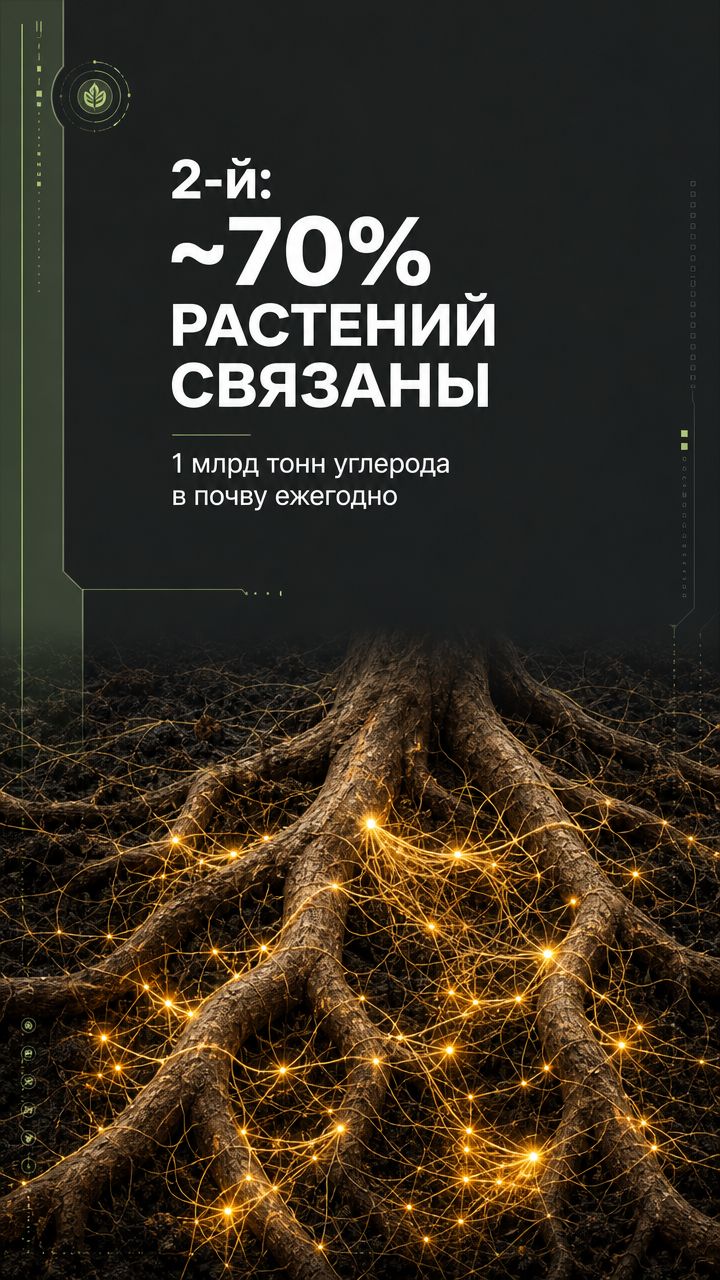
About 70% of plant species live with arbuscular fungi. Fly agaric is not among them: it forms ectomycorrhiza with tree roots.
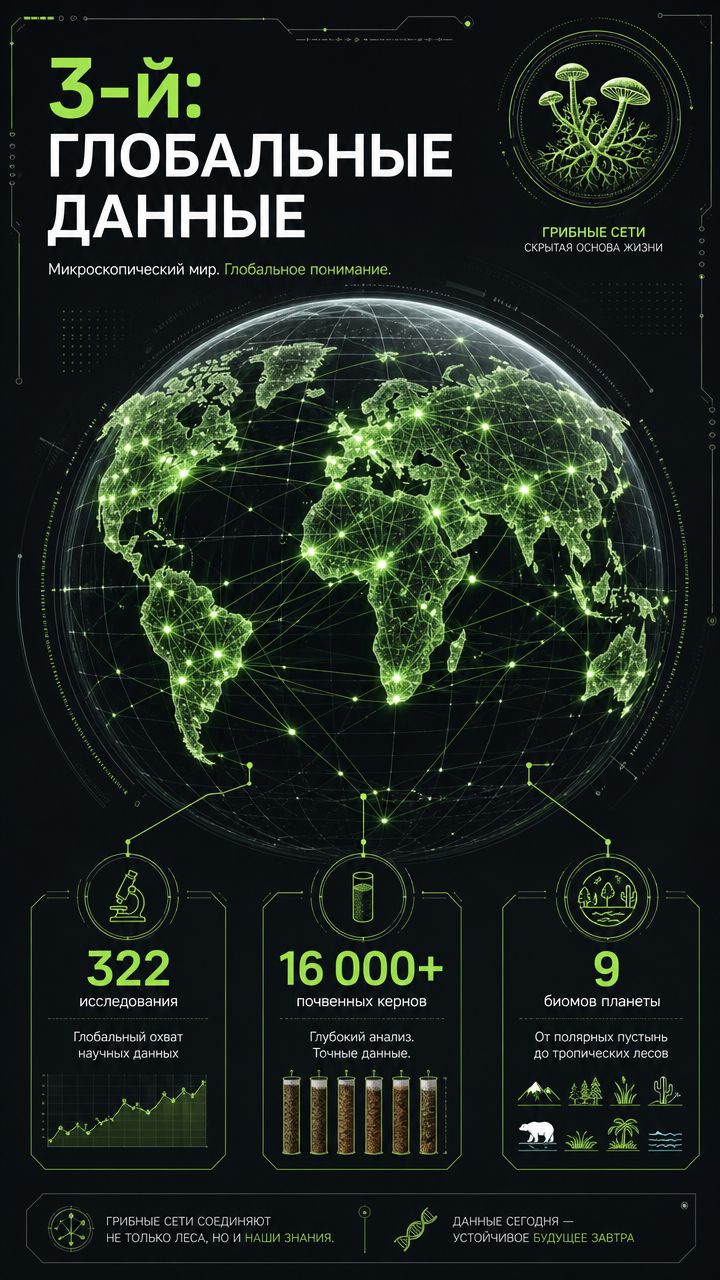
Data from 322 studies, more than 16,000 soil cores, 9 biomes.

The length of the networks was predicted by a machine-learning model. For calibration, more than 300,000 threads were imaged robotically.
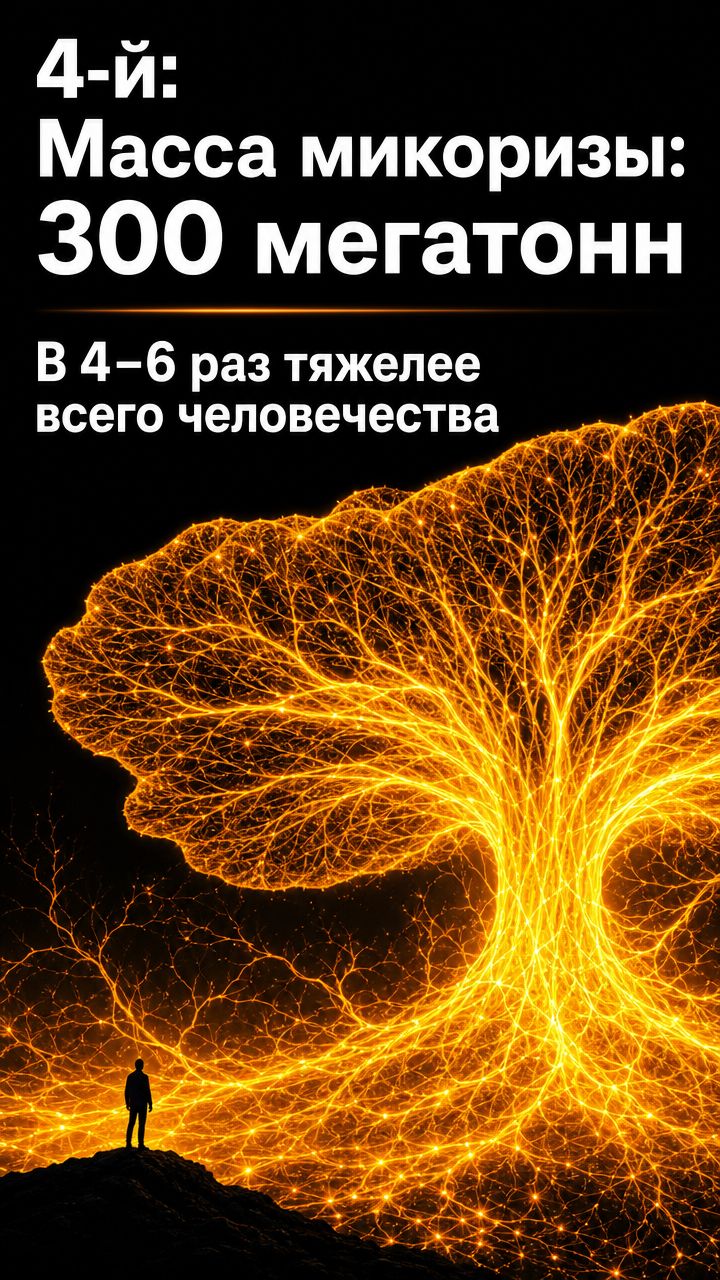
About 300 megatonnes of living mass, 4–6 times heavier than all people. And that is only arbuscular fungi.

1.1 × 10¹⁷ km of threads. That is about 740 million Earth–Sun distances, almost a billion.

About 1 billion tonnes of carbon a year goes into the soil through the networks. The figure of 13 billion tonnes of CO₂ in the section above measures something else: everything plants give to fungi.

Deep ploughing and heavy chemicals shrink mycorrhizal networks in the soil. This is known from agricultural research.
The fly agaric in this network
Mushroom underground, cap above ground
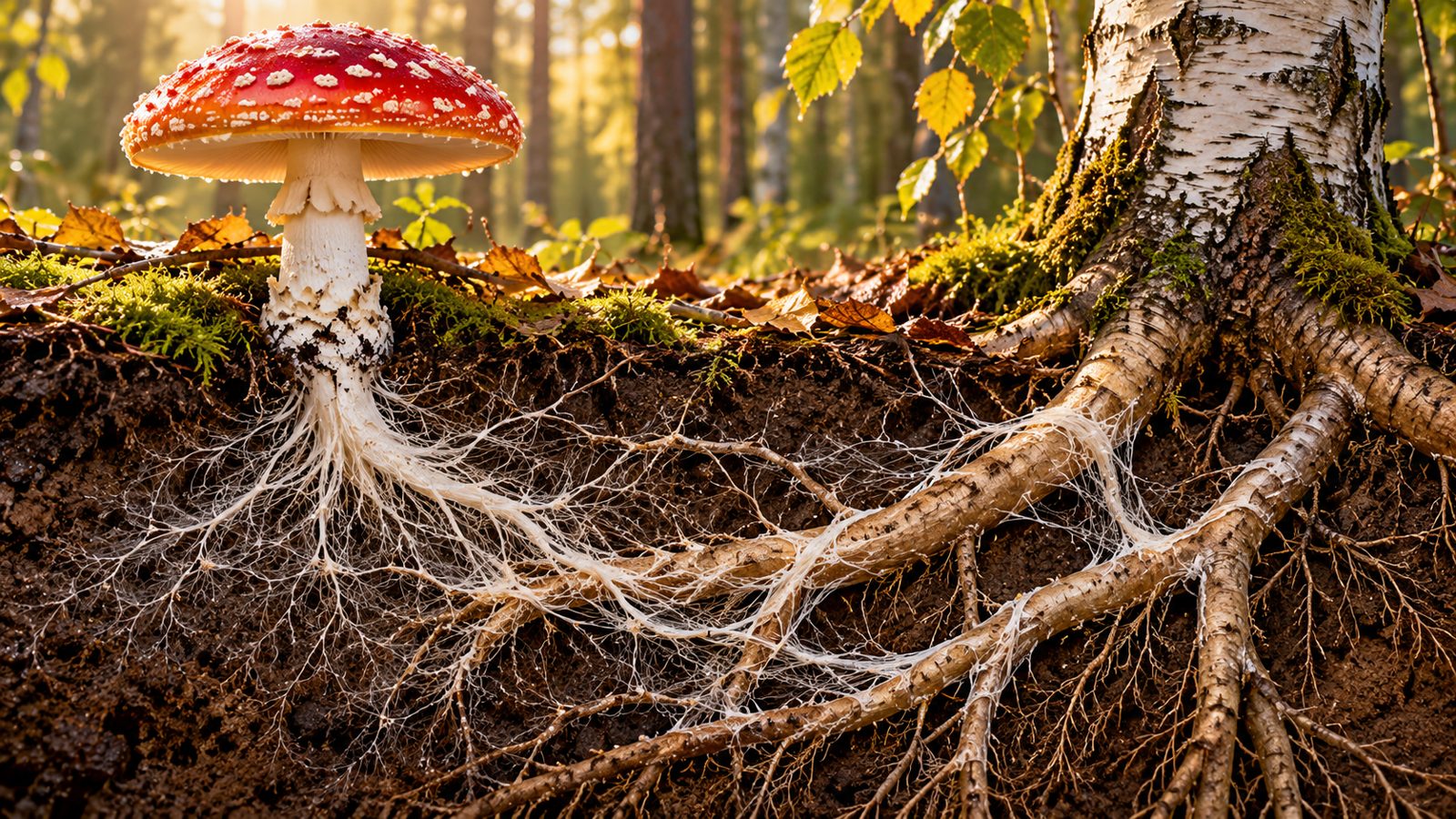
The red cap usually lives 1–3 weeks. The mycelium, a network of microscopic threads called hyphae, stays in the soil all year round. Fly agaric lives in partnership with the roots of birches and some conifers (ectomycorrhiza): the threads wrap around the root hairs, the tree gives the fungus sugars, the fungus gives the tree nitrogen and phosphorus from the soil. Fruiting bodies appear in late summer and autumn, probably when the days get shorter and colder and the rains come.
How a fungus built the forest
Out of the water
The oldest finds: fungal spores and threads from Arctic Canada about a billion years old, 500 million years older than the previous record holders. They were found in sediments of a shallow estuary. Whether they lived in water or already on land is not yet known. There is a hypothesis that fungi colonised land before plants.
The Conversation, 2019Rocks turn into soil
The first land plants had no roots and relied on fungal partners to grow on mineral ground. Fungal threads release organic acids that dissolve rock and free up minerals (biological weathering). That this is how fungi helped create soils is presented by scientists as a likely but not final explanation. Today more than 90% of land plants are associated with fungi.
The Conversation, 2019The Devonian giant
Prototaxites: columns up to 8 m tall and 1 m wide. The tallest organism on land of its time, while plants such as Cooksonia were about 6 cm tall. It was long thought to be a fungus. In 2026 a study of fossils from Rhynie found no chitin, the main component of fungi, and proposed a separate extinct branch of life.
Wikipedia, PrototaxitesThe largest organism
The dark honey fungus (Armillaria ostoyae) in Malheur National Forest, Oregon: about 965 hectares, at least 2,400 years old, possibly up to 8,650, with a mass of 6,800–31,750 tonnes.
Guinness World RecordsHow the network works
A network without a centre that regulates its own flows
A team of 28 researchers (Princeton, AMOLF, VU Amsterdam, SPUN) showed that two opposing flows run simultaneously in the fungus's tubes: sugars and fats one way, phosphorus and nitrogen the other. When there is a jam, the fungus widens the tubes where demand is higher. Growing tips search out new places on their own and fuse when they meet. There is no central control.
“A travelling-wave strategy for plant-fungal trade”, Nature, 26 February 2025Carbon that goes underground
Plants give fungi between 1 and 13% of their carbon. The estimate of 13 billion tonnes of CO₂ a year is probably too low: only part of the mycelium outside the roots was counted. Many ecosystems, especially in southern countries, are poorly studied.
Hawkins et al., 2023The first map of network length
Using about 16,000 soil samples and machine learning, SPUN and AMOLF estimated the total length of arbuscular fungal networks: 110 quadrillion km. Arable fields contain half as much network as wild ecosystems, and wild grasslands hold about 40% of its global volume. The authors call it “the first map”. The model has uncertainty, and dead networks are not counted. Older estimates for all mycelium in the top 10 cm of soil reach 450 quadrillion km, which is why the figures in sources differ severalfold.
Stewart et al., Science, 11 June 2026 (via Inside Climate News); Eos, 2026The underground atlas
25,000 soil samples, more than 2.8 billion DNA sequences, more than 150,000 species of mycorrhizal fungi. Only about 0.001% of the Earth's surface has been studied so far. Only 9.5% of the most species-rich places are in protected areas.
Van Nuland et al., Nature, 23 July 2025For the first time we can see what it looks like in the soil
A team from the Technical University of Munich used synchrotron tomography to show roots, fungal networks and soil together without removing the fungus from the ground. This used to take hours; now it takes minutes.
Braunmiller et al., via Eos, 2026The Earth's neural network: what is known and what is disputed
It looks like a brain
Nodes, thin threads, impulses, no central control. In its structure the network resembles a neural network. But that is a comparison, not proof of thinking.
The electrical “words” of fungi
Andrew Adamatzky recorded electrical impulses in the mycelium of four fungal species (ghost fungus, enoki, split gill, Cordyceps) and proposed a “lexicon” of up to 50 words, of which about 15–20 are core. Critics point out that the spikes may reflect nutrient flow or growth rather than messages. Any link to fungal “consciousness” is still highly speculative.
Adamatzky, Royal Society Open Science, 2022The “wood wide web” and “mother trees”
A review by Karst, Jones and Hoeksema checked the popular claims. Genotype mapping, the strongest kind of evidence, has been done in only five studies, and only two showed continuous fungal links between trees. Of 26 field studies, none requires an explanation via a shared fungal network, and in experiments separating roots and fungal threads, a benefit from the network was confirmed in only 5 of 28 experiments (18%). That “mother trees” send resources and warnings to their offspring has not been confirmed in the forest. Unsupported citations of such studies grew over time to almost half.
Karst, Jones, Hoeksema, Nature Ecology & Evolution, 2023But the networks do exist
Plants that get carbon directly from fungi (mycoheterotrophs, for example some orchids) live off such links, which is natural proof that the networks exist and carry carbon. In the laboratory, carbon passed from one seedling to another through a fungal network. Fungal organisms can stretch for metres, and neighbouring roots often share the same fungal species.
Merckx et al., Nature Plants, 2024; Karst et al., 2023What can honestly be said
The network is real. It carries carbon and nutrients, has no centre and redistributes flows by itself. What exactly trees pass to each other, and in which forests, remains disputed. There are no scientific data on the network thinking or being conscious. That is precisely why “the planet's brain” remains an image, not a discovery.
 Gifts of the forest
Other mushrooms
Six mushrooms, each on its own: what is known, what has been shown only in the lab, and what to treat with caution. These profiles are informational, not medical advice.
Fly agaric Amanita muscaria
What is known. The main hero of this site. It grows in partnership with birch, pine and spruce and fruits from late summer until the first frosts. Active substances: ibotenic acid and muscimol. Details in the “Chemistry”, “Pharma” and “Use” sections.
In humans. There are no placebo trials of the mushroom itself yet. Its substance muscimol has been tested in people: in tardive dyskinesia movements decreased (1979), in parkinsonism symptoms eased temporarily (2001), in Huntington's disease there was no effect (1978). The derivative gaboxadol went through placebo-controlled trials. The rest is self-reports and animal studies.
Voynova et al., Pharmacia, 2020Royal fly agaric Amanita regalis
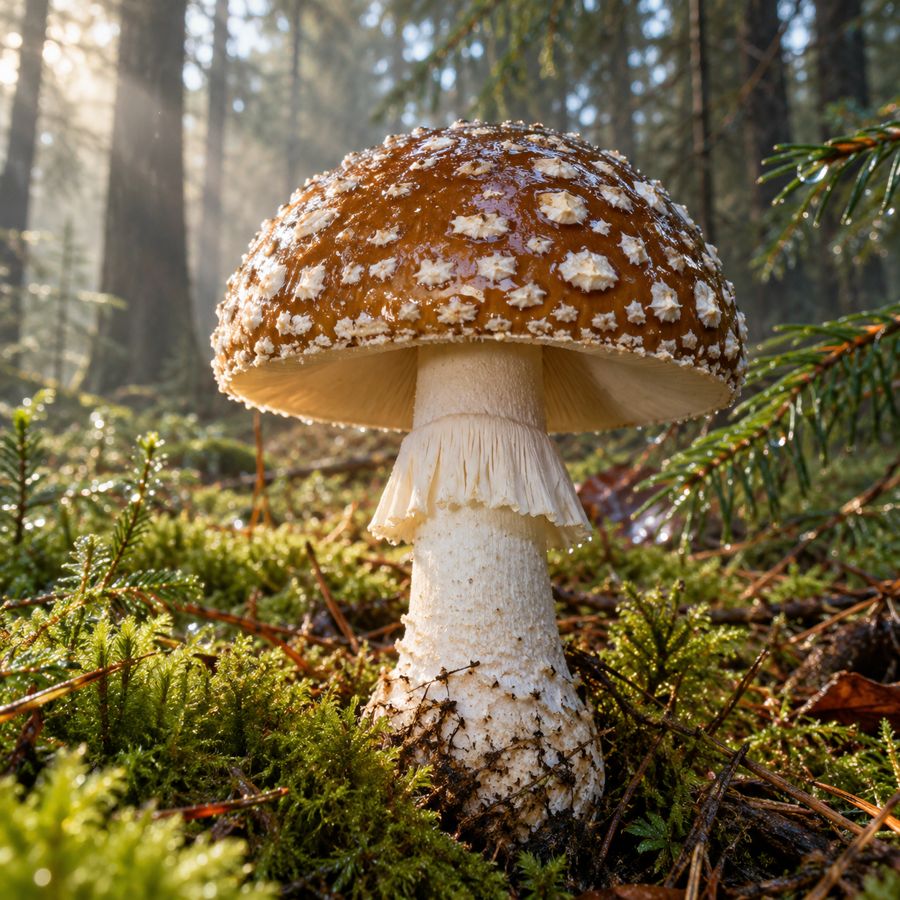
What it looks like. A glossy brown cap 10–20 cm across with white flakes of veil, a tall stem up to 25 cm, a hanging grooved ring. Grows with spruce, less often with birch. Not uncommon in Scandinavia (July–September), rare in Germany, where it was “Mushroom of the Year” 2000.
What is in it. Ibotenic acid and muscimol were found in dried samples; no muscarine was detected. In some collections the content was higher than in the red fly agaric, in Swedish ones lower, so strength is unpredictable from mushroom to mushroom.
Caution. Poisonings have been described: in Helsinki, three cases with hallucinations, loss of consciousness and, in some patients, cholinergic signs. It is confused with the panther cap, the young blusher and the parasol mushroom. Old claims of fatal cases in the toxicology literature are unconfirmed, but that does not make it safe.
Mushroom the Journal, First NatureChaga Inonotus obliquus
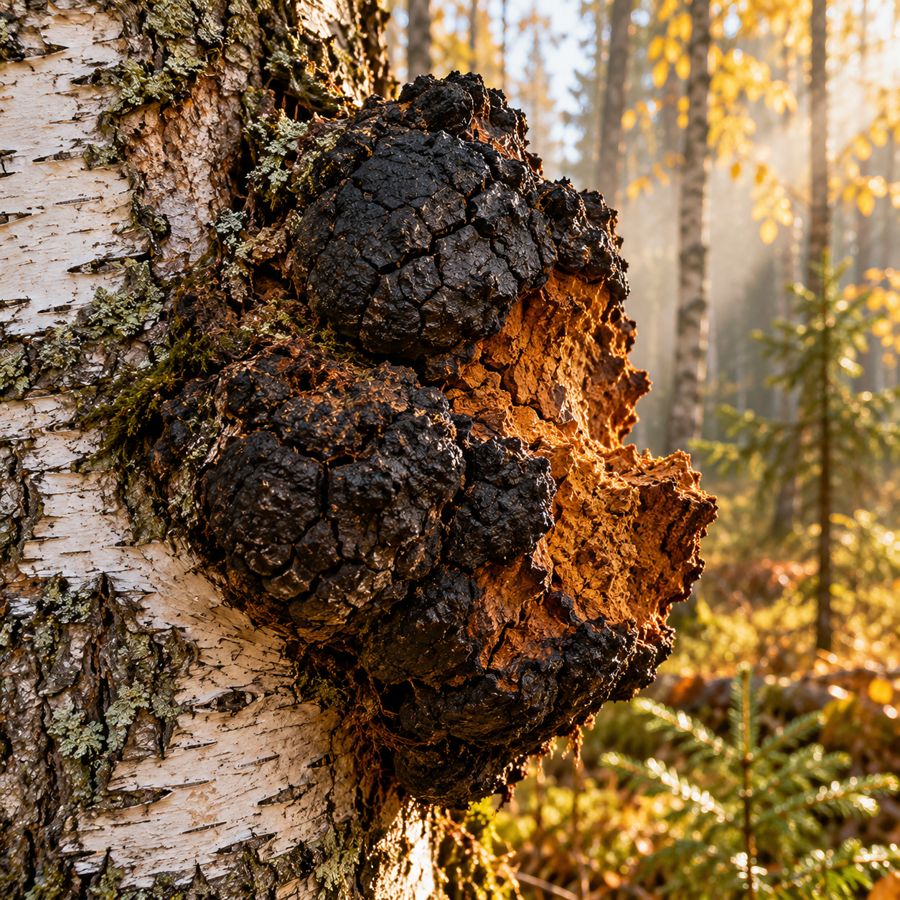
What it is. A black growth on birch in cold climates. It is not a fruiting body but a dense mass of mycelium. In Russian and northern folk medicine it is drunk as a tea.
What is known. Antitumour, blood-sugar-lowering and anti-inflammatory properties have been shown in cells and animals. There are no controlled trials in humans. There are two old Soviet observations without a control group: in psoriasis (1973, 50 people) the rash cleared completely in 38, and in stomach ulcers (1981, 58 people) pain eased but returned after stopping.
Caution. Cases of kidney failure due to oxalates have been described: a 72-year-old woman took 4–5 teaspoons of powder a day for six months and ended up on dialysis; a 49-year-old man did too after long-term use. It may enhance the effects of anticoagulants and blood-sugar-lowering drugs. If you have kidney problems or take such medicines, see a doctor first.
Memorial Sloan Kettering, chaga page; NAMA, review of chaga clinical trialsLion's mane Hericium erinaceus
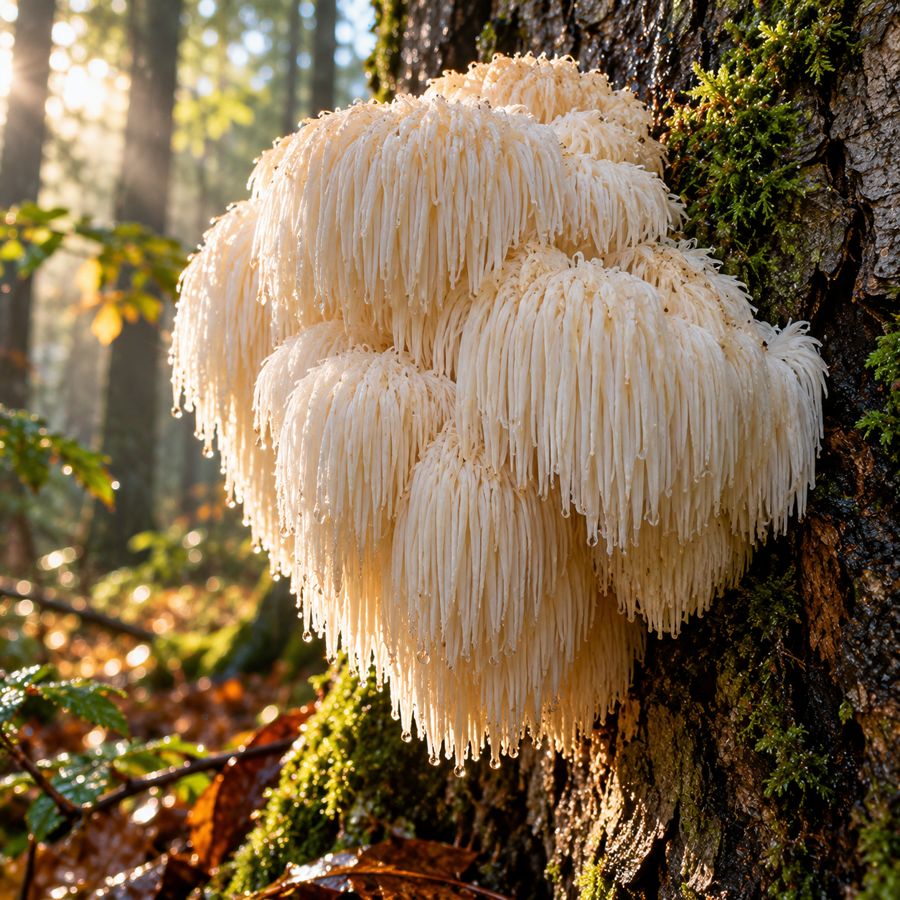
What is known. Hericenones (fruiting body) and erinacines (mycelium) stimulate synthesis of nerve growth factor in cells and in mice. Erinacine A crosses the blood–brain barrier in rats.
What happens in humans. In the Japanese study by Mori 2009 (30 people aged 50–80 with mild memory impairment, 3 g a day, 16 weeks) test scores improved, but 4 weeks after stopping the effect disappeared. In healthy adults results are mixed: Saitsu 2019 found improvement in one test out of three, Docherty 2023 (41 people, 28 days) found no benefit. In mild Alzheimer's disease (49 people, 49 weeks, erinacine A) daily-living skills improved, but not the main memory tests.
Mood and sleep. In a randomised placebo-controlled study (Nagano 2010, 30 women, 4 weeks, cookies with lion's mane) depression on the CES-D scale went down. In 77 people with excess weight (Vigna 2019, 8 weeks, no control group) depression, anxiety and sleep problems decreased.
New trials. 2025: a single 3 g dose of extract in 18 young adults (double-blind crossover study with placebo) gave no overall benefit for thinking or mood; only fine hand motor skills improved (Frontiers in Nutrition; the publication fee was partly paid by a maker of lion's mane drinks). 2026: 109 people aged 40–75 with memory complaints took 2 g a day for 8 weeks. Compared with placebo, attention and working memory improved, and sleep, morning restedness and mood improved faster, with no side effects (preprint, funded by the manufacturer).
Caution. Safe as food; there were no marked side effects in trials. Dosage has not been established, and supplements vary in composition. Rare in the wild in Europe; check local protection rules before picking.
Alzheimer’s Drug Discovery Foundation, Lion’s Mane review; Nagano et al., 2010; Vigna et al., 2019; Surendran et al., Frontiers in Nutrition, 2025; Daoust et al., medRxiv, 2026Chanterelle Cantharellus cibarius
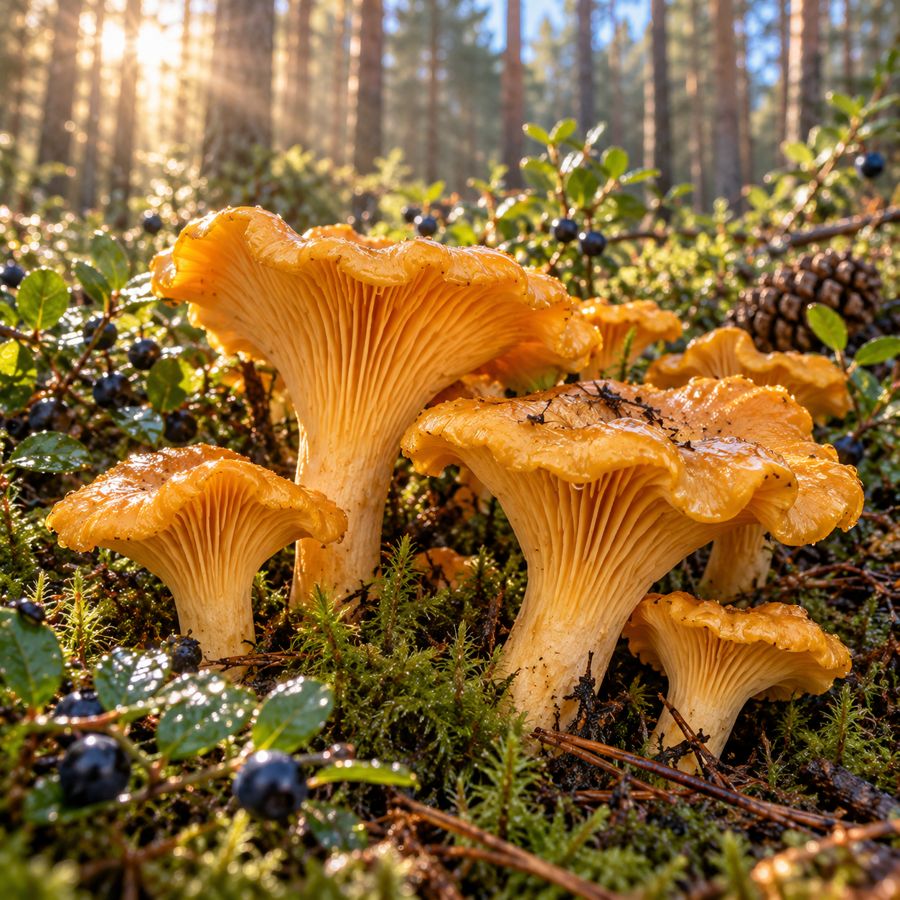
Check against real photos: chanterelles have thick forking ridges, not true gills.
What is known. Above all, delicious food. 54 grams of raw mushrooms contain about 17 kcal, 2 g of fibre, 14% of the daily value of vitamin D and 21% of copper. It is one of the few plant and fungal sources of vitamin D.
What is promised. Antioxidant, anti-inflammatory and antitumour effects have been shown only in cells in a test tube. There are no human trials.
Caution. Chanterelles accumulate heavy metals, so do not pick them near roads and factories. Look-alikes: the false chanterelle (Hygrophoropsis aurantiaca) is usually harmless but tasteless, while the olive-yellow poisonous Omphalotus olearius causes vomiting and diarrhoea; it does not grow in Latvia. Some people have allergies.
Healthline; Cantharellus cibarius: A Comprehensive Review, 2025Cordyceps militaris Cordyceps militaris

What it is. An orange fungus that parasitises insect pupae and larvae. What is sold is almost always grown on grain or rice, not wild. Do not confuse it with Himalayan cordyceps (Ophiocordyceps sinensis), which is rare and expensive.
What happens in humans. Endurance: Hirsch et al., Journal of Dietary Supplements, 2017. Double-blind, 28 people aged 18–35, a blend with about 4 g of cordyceps a day. After one week there was no noticeable benefit. In 10 people who continued for two more weeks, maximal oxygen uptake increased. The sample is tiny, and the study was paid for by the blend's manufacturer.
Immunity. Two placebo-controlled studies. In 80 healthy men in Korea, 1.5 g of extract a day for 4 weeks raised NK cell activity and IL-2 levels (Kang 2015). In Thailand, 40 adults drank a fermented cordyceps beverage for 8 weeks, and NK cell activity rose, by about 34% in men (Ontawong 2024). The samples are small.
New. 2026: a single 1 g dose of extract in 12 young men (double-blind crossover study with placebo) sped up reaction time after exercise by about 70 ms and raised resting oxygen uptake; peak endurance did not change (Iran, PLOS ONE). 2025: in over-exercised mice, cordycepin increased endurance and glycogen stores, lowered markers of fatigue and oxidative stress, and restored memory that had fallen to 40% of normal in exhausted mice (Scientific Reports).
Caution. There are no long-term safety data, and it is not recognised as a medicine anywhere. Its main substance, cordycepin, is being studied in the lab; its effects in humans are unproven.
Hirsch et al., 2017 (NutraIngredients summary); Kang et al., J Med Food, 2015; Ontawong et al., Scientific Reports, 2024; Farzan, Koushkie Jahromi, PLOS ONE, 2026; Cheng et al., Scientific Reports, 2025Cinema
Fly agaric in space and in Old Riga. These are artistic AI-made clips; they contain no facts and are not an encouragement to consume.
A cap above the planet.
Atmospheric entry.
Guests in Old Riga.
The panther and the bowl of raw material. A nod to the panther cap, Amanita pantherina.
Look deep inside yourself.
Good morning with a fly agaric.
Worth watching on YouTube
Where to buy
Wild-gathered dried fly agaric as raw material. The shop is connected to this website, and we say so openly.

Andrey Petrovich is in his sixth year of practising fly agaric microdosing himself. He regularly hosts live streams on TikTok, openly shares his personal experience and answers private messages. He calls himself a mushroom volunteer: he works with trusted pickers and recommends proven suppliers and sellers, so people avoid fakes and unpleasant consequences.
Live streams and videos on TikTok: DOXTOR_PETROVIC · @amanita_latvija
This is one person's experience, not medical advice. The site shows both what is confirmed and what is not.
Sold as raw material: not a medicine, food or dietary supplement. Before ordering from another country, check the “Legal status” section: where fly agaric or its substances are banned, ordering and importing can be a criminal offence. A separate warning for buyers in Lithuania: fly agaric has been banned there since 1 January 2025, and ordering or importing it there breaks Lithuanian law. Buyers are responsible for complying with the law of their own country.
Sources
- Ordak M. Amanita muscaria in the evolving NPS landscape. Frontiers in Pharmacology, 2026
- Ordak et al. Reasons, Form of Ingestion and Side Effects Associated with Consumption of Amanita muscaria. Toxics, 2023
- Stoeva-Grigorova et al. Acute Amanita muscaria Toxicity: literature review and two case reports. Toxins, 2025
- Matt F. Toxicity and medicinal use of Amanita muscaria: narrative review. Medical Matters, 2026
- Michelot D., Melendez-Howell L. Amanita muscaria: chemistry, biology, toxicology, and ethnomycology, 2003
- Amanita muscaria, Wikipedia
- Gaboxadol (THIP), Wikipedia
- MK0928 (gaboxadol) for insomnia, ClinicalTrials.gov
- Tsunoda K. Detoxification of Amanita muscaria (1993), review by William Rubel
- Ott J. Pharmacotheon: Amanita muscaria
- NAMA Toxicology Committee Report, 2006
- NAMA Toxicology Committee Report, 2013
- Amanita muscaria, Fungi magazine, 2018
- Carapeto et al. Larvicidal efficiency of Amanita muscaria against Musca domestica. Biotemas, 2017
- Wagner et al. Amanita muscaria extract and human microglia. Frontiers in Pharmacology, 2023
- Grochowska et al. Harmfulness and potential health benefits of the fly agaric. Health Problems of Civilization, 2025
- Turkia M. Psycholytic dosing of Amanita muscaria, case study, 2023
- Leas et al. (UC San Diego), 2024
- CNN Health: Amanita poisonings, 2026 (RAND estimate, California outbreak)
- FDA: Amanita muscaria not permitted in food, 2024
- Inside Climate News: Earth's underground fungal networks (SPUN study, Science, 11 June 2026)
- Hawkins et al. Mycorrhizal fungi and global carbon, 2023 (Mongabay)
- «A travelling-wave strategy for plant-fungal trade», Nature, 2025 (Princeton)
- Underground Atlas, Van Nuland et al., Nature, 2025
- Eos: Fungi are holding the food web together, 2026 (New Phytologist, TUM)
- Karst, Jones, Hoeksema. Positive citation bias and overinterpreted results on common mycorrhizal networks. Nature Ecology & Evolution, 2023
- Merckx et al. Mycoheterotrophy in the wood-wide web. Nature Plants, 2024
- Adamatzky. Language of fungi derived from their electrical spiking activity. Royal Society Open Science, 2022
- The Conversation: ancient fungi and the groundwork for complex life, 2019
- Prototaxites, Wikipedia
- Largest fungus, Guinness World Records
- Trees for Life: fly agaric facts
- Wasson R.G. Soma: Divine Mushroom of Immortality, 1968
- Stoned ape theory, Wikipedia
- Voynova et al. Toxicological and pharmacological profile of Amanita muscaria. Pharmacia, 2020
- The Royal Fly Agaric, Amanita regalis. Mushroom the Journal
- Amanita regalis (Brown Fly Agaric), First Nature
- Chaga mushroom, Memorial Sloan Kettering Cancer Center
- Lion’s Mane, Alzheimer’s Drug Discovery Foundation
- Nutritional, Nutraceutical, and Medicinal Potential of Cantharellus cibarius: A Comprehensive Review, 2025
- Chanterelle mushrooms, Healthline
- Hirsch et al. Cordyceps militaris and exercise tolerance, Journal of Dietary Supplements (NutraIngredients)
- Agaricus muscarius as a homeopathic remedy, DeCS thesaurus (BIREME / WHO-PAHO)
- Kondeva-Burdina et al. Neuroprotective and vasorelaxant effects of Amanita muscaria tincture. Pharmacia, 2026
- Ramawad et al. Muscimol as a treatment for nerve injury-related neuropathic pain: systematic review and meta-analysis of preclinical studies. Korean Journal of Pain, 2023
- The protective effect of muscimol against systemic inflammatory response in endotoxemic mice. Can J Physiol Pharmacol, 2022
- Günther, Bednarczyk-Cwynar. Ibotenic acid–muscimol ratio in Amanita muscaria. Molecules, 2026
- WHO / PAHO: Over 3 million annual deaths due to alcohol and drug use, 2024
- Nutt, King, Phillips. Drug harms in the UK: a multicriteria decision analysis. The Lancet, 2010
- NPR: Trump expedites review of psychedelics, 2026
- Compass Pathways: positive Phase 3 results, COMP360 psilocybin, 2026
- FDA. Scientific Memorandum: Amanita muscaria, 09.09.2024
- USPTO. Method for producing muscimol and/or reducing ibotenic acid from Amanita tissue
- Snodgrass S.R. Use of 3H-muscimol for GABA receptor studies. Nature, 1978
- Muscimol, Wikipedia
- Brain Infusion of Muscimol to Treat Epilepsy, ClinicalTrials.gov NCT00005925
- Heiss et al. Convection-Enhanced Delivery of Muscimol in Patients with Drug-Resistant Epilepsy. Neurosurgery, 2019
- STARS: phase 2 of gaboxadol (OV101) in Angelman syndrome, 2018
- NEPTUNE: phase 3 of gaboxadol (OV101), December 2020
- Lancel, Faulhaber. GABAA receptors and sleep regulation, 1996
- Hammond, Drower. Effects of intrathecally administered THIP, baclofen and muscimol on nociceptive threshold. Eur J Pharmacol, 1984
- Convection-enhanced muscimol delivery into the rat subthalamic nucleus, 2023
- Ibotenic acid, muscimol and ergosterol content of an Amanita muscaria hydroalcoholic extract. Molecules, 2023
- Milojević et al. Amanita muscaria acetone extract on JAR choriocarcinoma cells. Kragujevac J Sci, 2024
- Gören et al. Antimicrobial and antioxidant activities of Amanita muscaria ethanol extract. Caucasian J Sci, 2026
- Psyched Wellness: 90-day oral toxicity study of AME-1, 2022
- RAND: U.S. Psychedelic Use and Microdosing in 2025
- NDEWS Weekly Briefing 269 (Hartwig et al., 2025), 2026
- Amanita-Studie (CIIS), 2026
- USPTO, patent US 3,466,175: ibotenic and tricholomic acids as flavour enhancers
- Weser-Kurier: Fliegenpilz ist Pilz des Jahres 2022
- Fliegenpilz: Glückssymbol in Deutschland
- Tamminga, Crayton, Chase. Improvement in tardive dyskinesia after muscimol therapy. Arch Gen Psychiatry, 1979
- ROCKET: phase 2 of gaboxadol (OV101) in fragile X syndrome, 2020
- Moss, Hendrickson. Toxicity of muscimol and ibotenic acid containing mushrooms reported to a regional poison control center 2002–2016. Clin Toxicol, 2019
- Alternative Pharm Press: muscimol research overview, 2026 (Heiss 2019 results)
- Frost M. Three popular medicinal mushroom supplements: a review of human clinical trials. NAMA
- Nagano et al. Reduction of depression and anxiety by 4 weeks Hericium erinaceus intake. Biomed Res, 2010
- Vigna et al. Hericium erinaceus improves mood and sleep disorders in patients affected by overweight or obesity, 2019
- Kang et al. Cordyceps militaris enhances cell-mediated immunity in healthy Korean men. J Med Food, 2015
- Ontawong et al. Cordyceps militaris beverage and immune response in healthy adults. Sci Rep, 2024
- Leas E. A scientist's search for answers about Amanita muscaria gummies. Aeon, 2026
- Neophytides, Chase, Frohman. Stimulation of prolactin and growth hormone secretion by muscimol. J Clin Endocrinol Metab, 1978
- Krogsgaard-Larsen et al. THIP (gaboxadol) as a non-opioid analgesic and a novel type of hypnotic. Biochem Pharmacol, 2004
- De Stefano et al. Gaboxadol increases resting theta and alpha power in fragile X syndrome. J Neurodev Disord, 2026
- ClinicalTrials.gov NCT06334419
- ClinicalTrials.gov NCT04823052 (Healx, withdrawn)
- Baptiste et al. Epidural and subdural muscimol deliveries prevent focal seizures. AES, 2008
- Akirav et al. Enhancement of conditioned fear extinction by muscimol. Eur J Neurosci, 2006
- Chetyrkina M.V., Bychkov G.D. Fly agaric microdoses and cognition in rats, Chita State Medical Academy (in Russian)
- Kim et al. The toxicological pathologic study of Amanita muscaria in Sprague-Dawley rat. J Life Sci, 2009
- Psyched Wellness and NRC: neuroprotective properties of AME-1, 2022
- Psyched Wellness: neurobehavioral study of AME-1, 2023
- Technology Networks: Harnessing the therapeutic potential of muscimol
- LSM: fly agaric exports from Latvia, 2021 (in Latvian)
- Surendran et al. Acute effects of Hericium erinaceus on cognition and mood. Front Nutr, 2025
- Daoust et al. Hericium erinaceus on cognitive performance and wellbeing (RCT), medRxiv, 2026
- Farzan, Koushkie Jahromi. Acute Cordyceps militaris supplementation. PLOS ONE, 2026
- Cheng et al. Cordycepin improves fatigue caused by excessive exercise. Sci Rep, 2025
- Patočka, Kocandrlová. Pharmacologically and toxicologically relevant components of Amanita muscaria. MMSL, 2017
- Jurášek, Opletal, Drašar. On forest entheogen. Chemické listy, 2023 (in Czech)
- Evdokimova et al. The problem of legalized use of fly agarics. Problems of Biol., Med. and Pharm. Chemistry, 2025 (in Russian)